
The short answer
Not sure when to revise after studying? Learn how to time and space your revision, build a simple timetable, and remember more without last-minute cramming.
- Do a first review within a day of learning something new.
- Revisit each topic at growing intervals over the following weeks.
- Space beats cramming for remembering material long term.
- A simple timetable removes guesswork and last-minute panic.
- Short, frequent reviews are more effective than rare long ones.
The best time to revise after studying is soon, within a day of first learning something, and then again at growing intervals afterward. Memory fades fastest right after you learn, so an early review catches the material before it slips away. Getting the timing right lets you remember far more with less total effort.
Knowing when to revise after studying is really about building a simple schedule that beats last-minute cramming. Here is how to time your revision and turn it into a plan you can follow.
Key takeaways
- Do a first review within a day of learning something new.
- Revisit each topic at growing intervals over the following weeks.
- Space beats cramming for remembering material long term.
- A simple timetable removes guesswork and last-minute panic.
- Short, frequent reviews are more effective than rare long ones.
Why timing matters
After you learn something, your memory of it starts fading almost immediately unless you revisit it. This is normal and happens to everyone. The trick is to review the material just as it begins to slip, which refreshes it and slows the forgetting. Each well-timed review makes the memory last longer than the one before.
Review soon after learning
Your first revision should come quickly, ideally within a day of the original study session. At this point a short review is enough to lock in what you learned, because the material is still fairly fresh.
A quick same-day recap
Spending even ten minutes at the end of the day recalling what you studied makes a real difference. Close your notes and try to remember the main points, then check. This small habit dramatically improves how much survives to the next day.
Space out later reviews
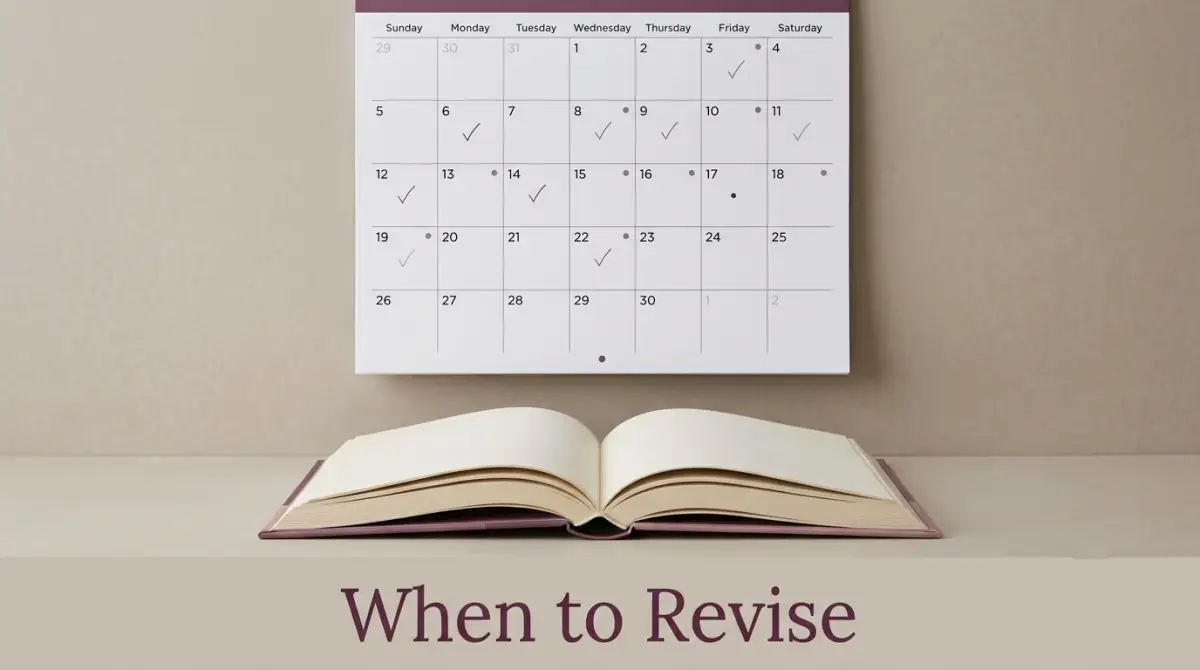
After the first review, revisit the topic at widening intervals. A common rhythm is to review a day later, then a few days later, then a week or two later. As the memory strengthens, you need to revisit it less often.
- Day one. Learn the material.
- Within a day. Do a short first review.
- A few days later. Test yourself again.
- A week or two later. Review once more to cement it.
Each pass takes less time, which is why spacing is efficient as well as effective.
Build a revision timetable
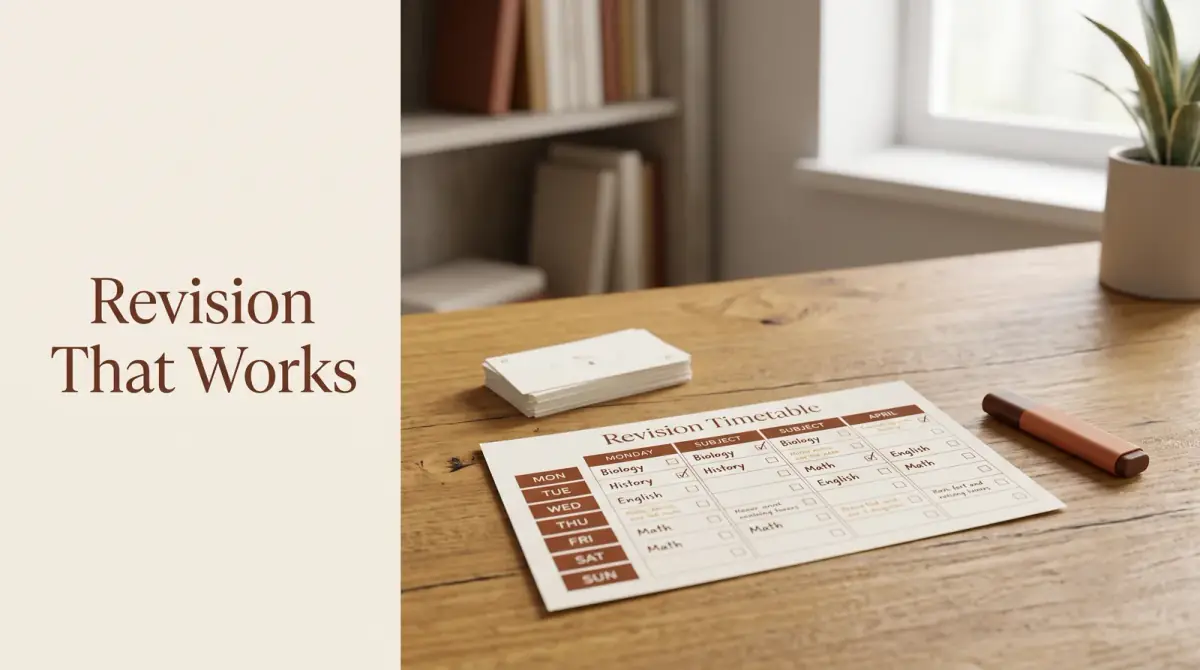
Deciding when to revise after studying is far easier with a timetable than by memory. Writing it down means you never have to wonder what to revise today.
- List your topics. Break subjects into manageable chunks.
- Schedule the first reviews. Slot a quick recap the day after you learn each topic.
- Add spaced repeats. Pencil in follow-up reviews at growing intervals.
A plan turns revision from a source of anxiety into a series of small, manageable steps. The timetable does the remembering so you do not have to.
Keep reviews short and frequent
Long, rare revision sessions are less effective than short, frequent ones. Reviewing a topic for fifteen minutes on several days beats a single exhausting session, because each separate review reinforces the memory again. Short reviews are also easier to fit into a busy schedule, which means you are more likely to actually do them.
The best times of day to revise
When to revise is not only about spacing across days, but also about the hours within a day. Most people have periods when they focus more easily, often the morning for some and the evening for others. Notice when your concentration comes most naturally and reserve those windows for your hardest revision.
Save easier tasks, like light review or organizing notes, for the times when your energy dips. Working with your natural rhythm rather than against it means the same hour of revision achieves more. There is no universal best time, so pay attention to your own pattern and build around it.
Adjust the plan as exams approach
Your revision schedule should shift as the exam nears. Early on, focus on learning and first reviews, spacing topics comfortably apart. As the exam draws closer, tighten the intervals and lean more heavily on active recall and past papers to sharpen what you already know.
In the final week, avoid trying to learn large amounts of brand-new material. Instead, consolidate, review your weakest areas, rehearse under timed conditions, and keep your reviews short and frequent. A plan that evolves from learning to consolidating keeps you calm and prepared rather than scrambling at the end.
Rest is part of the schedule
A revision timetable packed with nonstop study is a recipe for burnout, and a tired brain remembers poorly. Build rest into your plan deliberately, with regular breaks, proper sleep, and at least some time away from your books each day. These are not indulgences, they are when your brain consolidates what you have learned.
Treat sleep in particular as part of your revision, since much of the memory work happens overnight. A well-rested mind revises faster and recalls more, so protecting your rest is one of the smartest things you can put on the timetable.
Questions students ask about revision timing
Should I revise right after a class or later?
A quick review soon after learning, ideally the same day, is valuable because it catches the material before it fades. It does not need to be long. Even ten minutes of recalling the main points locks in far more than leaving it untouched. Then space your later reviews over the following days to move the knowledge into long-term memory.
How often should I revisit the same topic?
A simple rhythm works well: review a day after learning, then a few days later, then a week or two after that. Each pass takes less time as the memory strengthens. You do not need to be rigid about the exact days. The principle is to revisit topics at widening intervals rather than in one big block.
Is it bad to revise late at night?
Late-night revision can work in moderation, but pushing into lost sleep backfires. Sleep is when your brain consolidates what you learned, so trading rest for extra hours often costs you more than it gains. A short review before bed can actually help material stick, provided you still get a full night's sleep afterward.
Why this beats cramming
Cramming loads everything into short-term memory the night before, where most of it evaporates within days. Spacing your revision after studying moves knowledge into long-term memory, so it is still there on exam day and beyond. It also spreads the workload, so you avoid the stress and exhaustion of trying to learn everything at once. Plan your timing well, and you will study less in a panic and remember more with calm.



Comments
0 total