

The short answer
Learn how to improve your credit score with practical steps: pay on time, lower your usage, fix errors, and build a stronger credit profile.
- Payment history — whether you pay on time. This is typically the biggest factor.
- Credit utilization — how much of your available credit you're using.
- Length of credit history — how long your accounts have been open.
- Credit mix — the variety of accounts, such as cards and installment loans.
- New credit — how many recent applications you've made.
Learning how to improve your credit score comes down to a few consistent habits: pay every bill on time, keep your balances low, and give your accounts time to age. A stronger score can unlock lower interest rates, easier approvals, and thousands of dollars in savings over your lifetime, so the effort pays off in a very literal way.
The good news is that credit scores are built on patterns, not perfection. Even if your history isn't spotless, steady, sensible behavior can move your score up over the coming months.
What is a credit score and why does it matter?
A credit score is a number that lenders use to estimate how likely you are to repay borrowed money. Higher scores signal lower risk, which usually means better loan terms. Your score influences whether you're approved for credit cards, mortgages, car loans, and sometimes even apartments and phone plans.
Scores are calculated from the information in your credit report. While the exact formulas are proprietary, the main ingredients are well known and consistent across scoring models.
What actually affects your credit score?
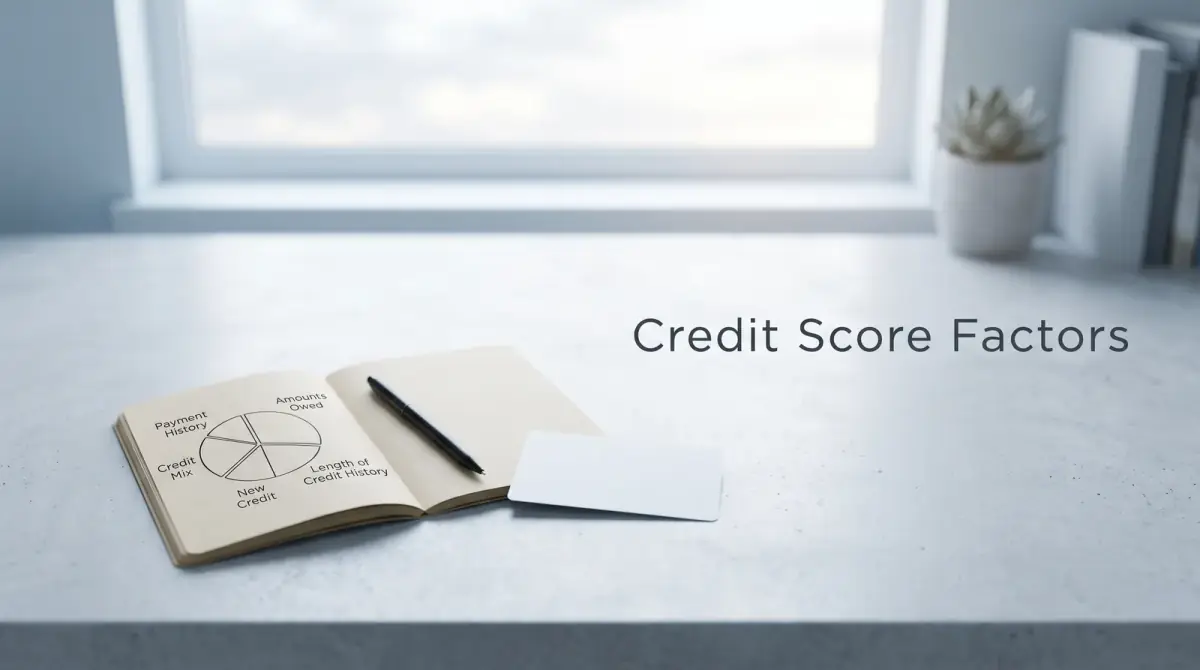
Most scoring systems weigh a handful of factors. Understanding them tells you exactly where to focus.
- Payment history — whether you pay on time. This is typically the biggest factor.
- Credit utilization — how much of your available credit you're using.
- Length of credit history — how long your accounts have been open.
- Credit mix — the variety of accounts, such as cards and installment loans.
- New credit — how many recent applications you've made.
Notice that the two heaviest factors, payment history and utilization, are also the ones most within your control right now.
How to improve your credit score, step by step
1. Always pay on time
Nothing helps more than a spotless payment record. A single late payment can linger on your report for years. Set up automatic minimum payments so you never miss a due date, then pay more when you can. If you've missed payments before, getting current and staying current is the fastest way to rebuild trust.
2. Lower your credit utilization
Credit utilization is the percentage of your available credit that you're using. Experts generally recommend keeping it low, ideally well under a third of your limit. If you have a card with a limit and you routinely carry a high balance, your score takes a hit even when you pay on time.
You can lower utilization in three ways.
- Pay down balances as aggressively as your budget allows.
- Make an extra payment mid-month before the statement closes.
- Request a credit limit increase (without increasing your spending).
3. Don't close your oldest accounts
The age of your credit history matters. Closing an old card can shorten your average account age and reduce your available credit, both of which can nudge your score down. If a card has no annual fee, it's often wise to keep it open and use it occasionally.
4. Check your credit report for errors
Mistakes on credit reports are more common than people expect, and they can quietly drag down your score. Request your report, review it carefully, and dispute anything inaccurate, such as accounts you don't recognize or payments wrongly marked late. In many places you're entitled to free copies of your report periodically.
5. Apply for new credit sparingly
Each formal application can trigger a hard inquiry, which may ding your score slightly and stays on your report for a while. Opening several accounts in a short span can look risky to lenders. Apply only when you genuinely need to, and space out applications.
How long does it take to see results?
Credit improvement is a marathon, not a sprint. Some changes, like lowering your utilization, can show up within a billing cycle or two. Others, like recovering from missed payments or building a longer history, take many months or years of consistency.
The encouraging part is that your score reflects recent behavior more heavily than old mistakes. Every on-time payment gradually outweighs a rough patch in your past.
Common mistakes to avoid
A few well-meaning moves can backfire. Watch out for these.
- Closing cards to "clean up" your accounts, which can raise utilization and shorten history.
- Maxing out a card even if you plan to pay it off later.
- Ignoring your report and missing errors or signs of fraud.
- Paying for quick-fix services that promise instant results; no one can legally remove accurate information.
Build habits that protect your score for life
Once your score is healthy, the goal shifts to keeping it there. The same fundamentals apply: pay on time, keep balances low, and monitor your report regularly. Many banks and free services let you track your score so you can spot changes early.
Treat your credit like a long-term asset. Small, steady discipline compounds into real financial freedom.
The takeaway
Improving your credit score isn't about tricks; it's about trustworthy patterns. Pay every bill on time, keep your utilization low, protect your oldest accounts, and check your report for errors. Do these consistently and your score will climb, opening doors to better rates and a more secure financial future. Start with one habit today, and let time do the rest.

Comments
0 total