
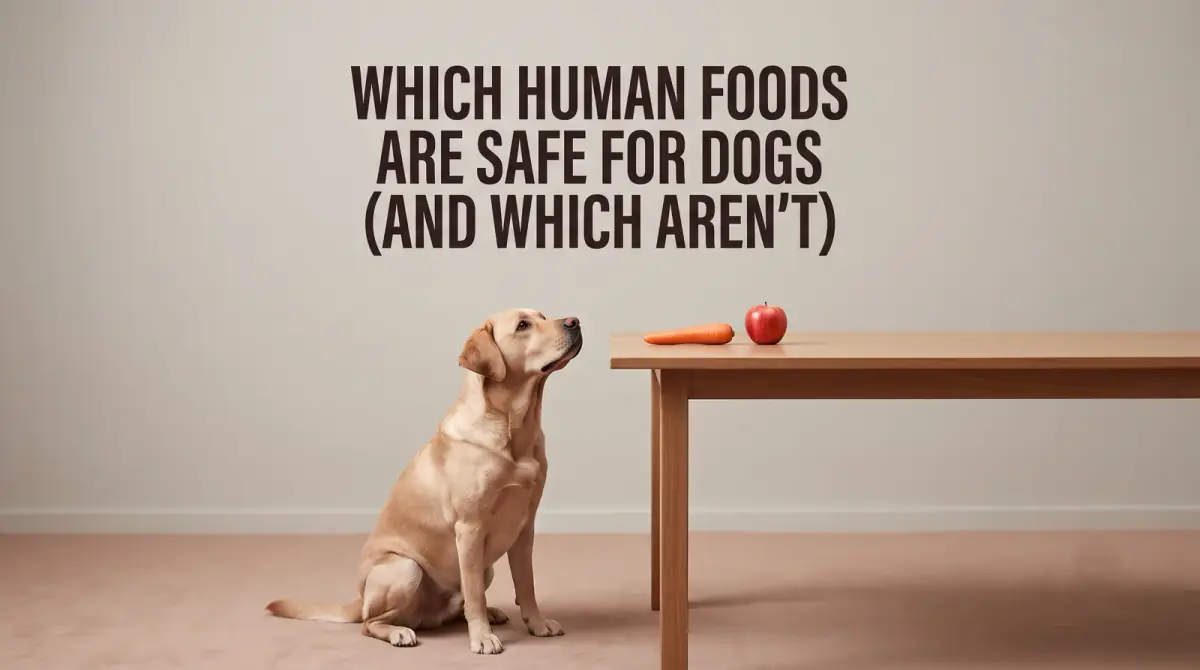
The short answer
Some scraps are perfectly fine and others are genuinely dangerous. Here is a clear, practical guide to which human foods are safe for dogs and which you should never share.
- Many plain, unseasoned foods are safe for dogs in moderation.
- Chocolate, grapes, onions, and xylitol are among the most dangerous.
- Rich, fatty, or heavily seasoned scraps can upset a dog's stomach.
- Treats of any kind should stay a small part of the daily diet.
- When in doubt, leave it out and ask your vet.
Wondering what human food is safe for dogs? The short answer is that plenty of everyday foods are fine in small amounts, including plain cooked meats, many fruits and vegetables, and plain rice, while a smaller but important group can be genuinely dangerous. Sharing from your plate is not off limits, but it does mean knowing the difference before you hand anything over.
This is general guidance for healthy adult dogs, not medical advice. Dogs vary in size, age, and health, so if your dog has a known condition or reacts badly to a new food, check with your vet before making it a habit.
Key takeaways
- Many plain, unseasoned foods are safe for dogs in moderation.
- Chocolate, grapes, onions, and xylitol are among the most dangerous.
- Rich, fatty, or heavily seasoned scraps can upset a dog's stomach.
- Treats of any kind should stay a small part of the daily diet.
- When in doubt, leave it out and ask your vet.
What makes a food safe or unsafe for dogs
Dogs and people digest food differently, so a snack that is harmless to you can still be a problem for them. Some ingredients are toxic to dogs even in small doses, while others are simply too rich, salty, or sugary to sit well in a canine stomach.
As a rule, the safest human foods are plain, cooked simply, and free of added salt, sugar, butter, and spices. Because portion matters just as much as the food itself, even a safe option can cause an upset if your dog eats a large amount at once.
Human foods dogs can eat safely
Plenty of foods dogs can eat are probably already in your kitchen. Offered plain and in sensible amounts, these make good occasional additions to the bowl or handy training rewards.
Lean cooked meats
Plain chicken, turkey, and lean beef are excellent, provided they are fully cooked with no bones, skin, oil, or seasoning. These are a favourite for good reason and work well as high value treats.
Certain fruits
Apple slices without the core or seeds, blueberries, watermelon without seeds or rind, and small pieces of banana are generally well tolerated. Fruit is naturally sweet, so keep the portions modest.
Many vegetables
Carrots, green beans, plain cooked pumpkin, and cucumber are crunchy, low calorie options that many dogs enjoy. A raw carrot even doubles as a satisfying chew on a lazy afternoon.
Plain staples
Plain cooked rice, plain oatmeal, and plain boiled potato are gentle, easy to digest choices. That is exactly why they often turn up in the bland diets vets suggest for a sensitive stomach.
Foods that are toxic to dogs
Some foods are toxic to dogs and should never be shared, no matter how much your dog begs. Keep these well out of reach, and remember that many hide inside baked goods and processed snacks.
- Chocolate, especially dark and baking chocolate.
- Grapes and raisins, which can harm the kidneys.
- Onions, garlic, leeks, and chives, whether raw or cooked.
- Xylitol, a sweetener in sugar free gum, sweets, and some peanut butters.
- Macadamia nuts, and for many dogs other rich nuts too.
- Alcohol and caffeine in any form at all.
If your dog swallows any of these, treat it as urgent and contact your vet or an emergency animal service straight away, even if your dog seems fine at first.
Foods to give only with caution
Between clearly safe and clearly toxic sits a grey area. These foods are not poisonous, but they carry enough risk to make them poor everyday choices.
Fatty trimmings, fried food, and buttery leftovers can trigger stomach upset or worse in sensitive dogs. Cooked bones are a hazard because they splinter, and salty or heavily processed foods pile on far more sodium than a dog needs. Dairy is another common culprit, since many dogs cannot digest milk and cheese well and end up gassy or loose as a result. When you are unsure about a rich or unusual leftover, it is better to hold back than to risk a sore stomach, and to ask your vet if you want to be certain.
How to figure out what human food is safe for dogs
When you are unsure what human food is safe for dogs, a few simple questions will steer you right most of the time. Rather than memorising every food, learn to read the situation in front of you.
- Is it plain, or is it cooked with salt, butter, or spices?
- Does it contain onion, garlic, chocolate, grapes, or xylitol?
- Is the portion small relative to your dog's size?
- Is this an occasional treat rather than a daily habit?
If a food is plain, free of the known dangers, and offered in a small amount, it is usually fine. However, when any answer gives you pause, the safest move is to skip it and ask your vet.
Safe treats for dogs and sensible portions
The best safe treats for dogs are small, simple, and given in moderation. A widely used guideline is that treats and extras should make up only a modest slice of daily calories, with the rest coming from a balanced dog food.
Break treats into tiny pieces so a training session does not turn into a full meal. Because dogs value the reward itself more than its size, a pea sized piece of chicken often works just as well as a large one, and it keeps the calories in check.
What to do if your dog eats something unsafe
Even careful owners have moments when a dog snatches something off the floor. If that happens, try to note what it was and roughly how much, because that information helps enormously.
For anything on the toxic list, or if your dog seems unwell, contact your vet or an emergency service without waiting. Signs such as vomiting, diarrhoea, tiredness, or a loss of appetite that is severe or persistent always deserve a professional opinion rather than a wait and see approach.
A simple rule for sharing food
You do not need to memorise every food to feed your dog safely. Stick to plain, cooked, unseasoned options, keep the known toxic foods far out of reach, and treat everything else as an occasional extra rather than a staple.
When you follow that simple rule, sharing a snack becomes a small pleasure instead of a worry. And whenever a food leaves you uncertain, remember that your vet is the best source of advice tailored to your own dog.


Comments
0 total