
The short answer
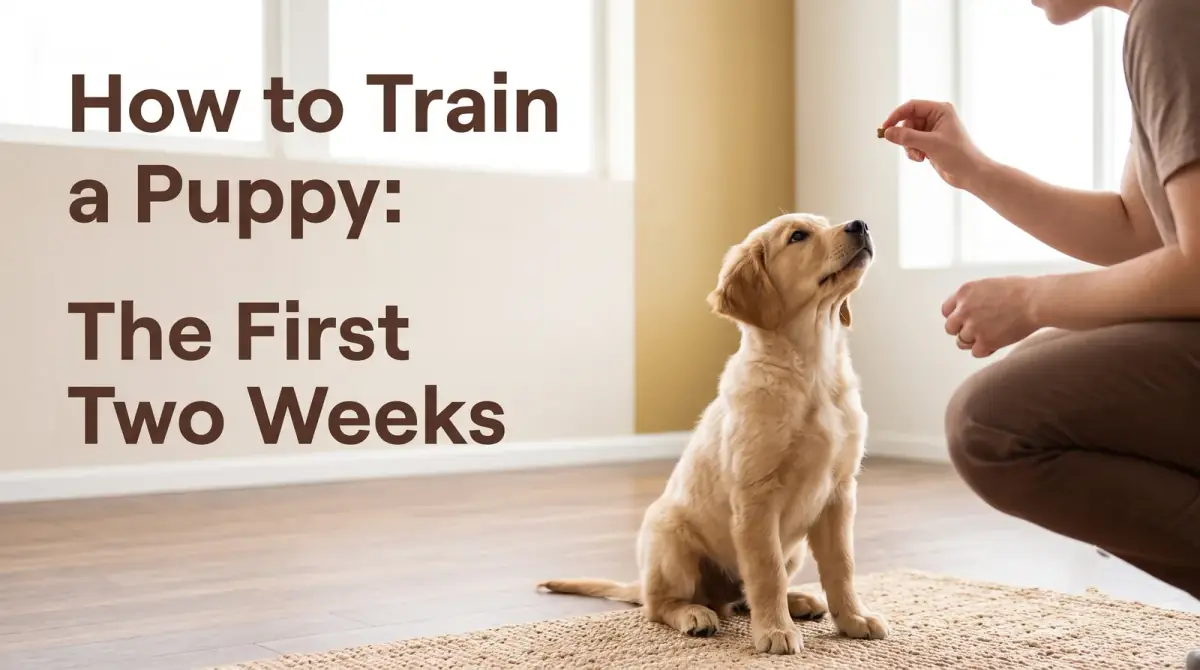
The first fortnight sets the tone for years. Learn how to train a puppy in the first two weeks, from house training to gentle boundaries and calm early routines.
- The first two weeks are about safety and routine, not advanced obedience.
- Consistency and calm repetition teach a puppy faster than any single trick.
- Reward the behavior you want the moment it happens.
- House training works best with frequent trips out and lots of praise.
- Book an early vet visit and ask about vaccinations and safe socializing.
Learning how to train a puppy in those first two weeks is less about teaching clever tricks and more about building trust, a routine, and a sense of safety. In this early stretch your job is to help your puppy feel secure, start gentle house training, and set kind, consistent boundaries that will pay off for years. Keep sessions short, rewards generous, and your patience deep, and the foundation almost builds itself.
Every puppy learns at its own pace, so treat these first two weeks as a settling-in period rather than a race. Small, steady wins matter far more than fast results.
Key takeaways
- The first two weeks are about safety and routine, not advanced obedience.
- Consistency and calm repetition teach a puppy faster than any single trick.
- Reward the behavior you want the moment it happens.
- House training works best with frequent trips out and lots of praise.
- Book an early vet visit and ask about vaccinations and safe socializing.
How to train a puppy in the first two weeks
When you think about how to train a puppy at the very start, keep the goals simple. Your puppy has just left everything it knew, so the first priority is helping it feel calm and safe in a brand new world.
From that base of security, everything else follows. A relaxed puppy learns quickly, while an anxious one struggles to take anything in. So the early days are about gentle structure, predictable routines, and plenty of quiet reassurance rather than drilling commands.
Set up a safe, predictable space
Before the training even begins, the environment does a lot of the work. A puppy that knows where to sleep, eat, and rest settles far more easily than one with the run of a whole house.
- Choose one cozy area with a bed or crate where your puppy can rest undisturbed.
- Remove or block off hazards such as loose cables and small objects that could be chewed.
- Keep food, water, and toys in consistent places.
- Give the puppy quiet time to nap, since young puppies sleep a great deal.
A crate, introduced gently and never used as punishment, can become a puppy's favorite den. For example, tossing a treat inside and letting the puppy explore at its own pace turns the crate into a good place rather than a scary one.
Start house training from day one
House training is usually the first real task on any new owner's mind, and the early weeks are the time to begin. To house train a puppy well, you rely on frequency, timing, and praise rather than scolding.
Take your puppy outside often: after waking, after eating, after play, and every couple of hours in between. Choose a consistent spot, and the moment your puppy goes in the right place, praise warmly and offer a small treat.
When accidents happen
Accidents are a normal part of the process, not a failure. If you catch your puppy mid-accident, calmly interrupt and carry it outside, then reward any success there. Never punish or rub the puppy's nose in a mess, because that only teaches fear and slows the whole thing down.
Clean indoor accidents thoroughly with a suitable cleaner so no lingering scent draws the puppy back to the same spot.
Build a simple daily routine
Puppies thrive on predictability, and a steady routine is one of the most powerful puppy training basics there is. When meals, potty breaks, play, and sleep happen at roughly the same times, your puppy learns what to expect and feels calmer for it.
A gentle rhythm also makes house training far easier, because regular meals lead to more predictable potty needs. Try to keep the early routine consistent even on busy days, since sudden changes can unsettle a young puppy who is still finding its feet.
Teach the first easy skills
Once your puppy is settling in, you can introduce a few very simple skills. Keep every session short, just a few minutes, and always end on a happy note while your puppy is still enjoying it.
- Name recognition: Say the puppy's name in a bright tone, and reward it for looking at you.
- Sit: Use a treat to guide the nose up and back until the puppy sits, then reward.
- Coming when called: Encourage the puppy toward you with a happy voice and reward every arrival.
- Gentle handling: Softly touch paws and ears during cuddles so grooming and vet visits feel normal later.
Reward-based training works because it makes good behavior worth repeating. Use small, tasty treats, praise, and play, and avoid harsh corrections, which tend to create worry rather than learning.
Set gentle boundaries early
Kind boundaries are part of raising a happy, confident dog, and the first two weeks are a fine time to begin. The trick is to be gentle and consistent rather than stern.
Nipping and mouthing are normal for puppies, since they explore the world with their mouths. When teeth meet skin, calmly redirect your puppy to a chew toy, so it learns what is fine to bite and what is not. If play gets too rough, pausing the game for a moment teaches that gentle play keeps the fun going.
Decide as a household which rules matter, such as whether the puppy is allowed on the sofa, and keep everyone consistent. Mixed messages confuse a puppy, while a united approach helps it learn quickly.
Look after health and early socializing
Training and wellbeing go hand in hand in the first weeks, and some early steps are best guided by a professional. Booking an initial vet visit soon after your puppy arrives is a wise move.
At that appointment you can arrange a general health check and discuss vaccinations, parasite prevention, and diet. This is also the right place to ask when and how your puppy can safely start meeting other dogs and exploring new places, since guidance depends on your puppy's age and vaccination status.
If your puppy shows anything that concerns you, such as ongoing tummy upset, refusing food, low energy, or any symptom that persists, do not try to diagnose it yourself. Contact your vet, who can advise on anything worrying or persistent.
Patience is the real lesson
By the end of two weeks you will not have a perfectly trained dog, and that is completely normal. What you can build is a puppy that feels safe with you, is starting to grasp house training, and is learning that good things come from paying attention to its person.
Keep the sessions short, the rewards kind, and your expectations gentle. That steady, patient approach is the heart of how to train a puppy well, and the calm, trusting bond you form now is the best foundation for everything you will teach in the months ahead.



Comments
0 total