
The short answer
Even to the bathroom? You are not alone. Here is why your dog shadows you, when it is pure devotion, and the signs that point to separation anxiety.
- Following you is usually normal attachment and a sign of trust.
- Dogs are pack animals, so sticking with their group is instinctive.
- Some breeds and rescue dogs are naturally more clingy, or velcro, than others.
- Following becomes a concern only when your dog panics or struggles alone.
- Building gentle independence helps a clingy dog feel calmer.
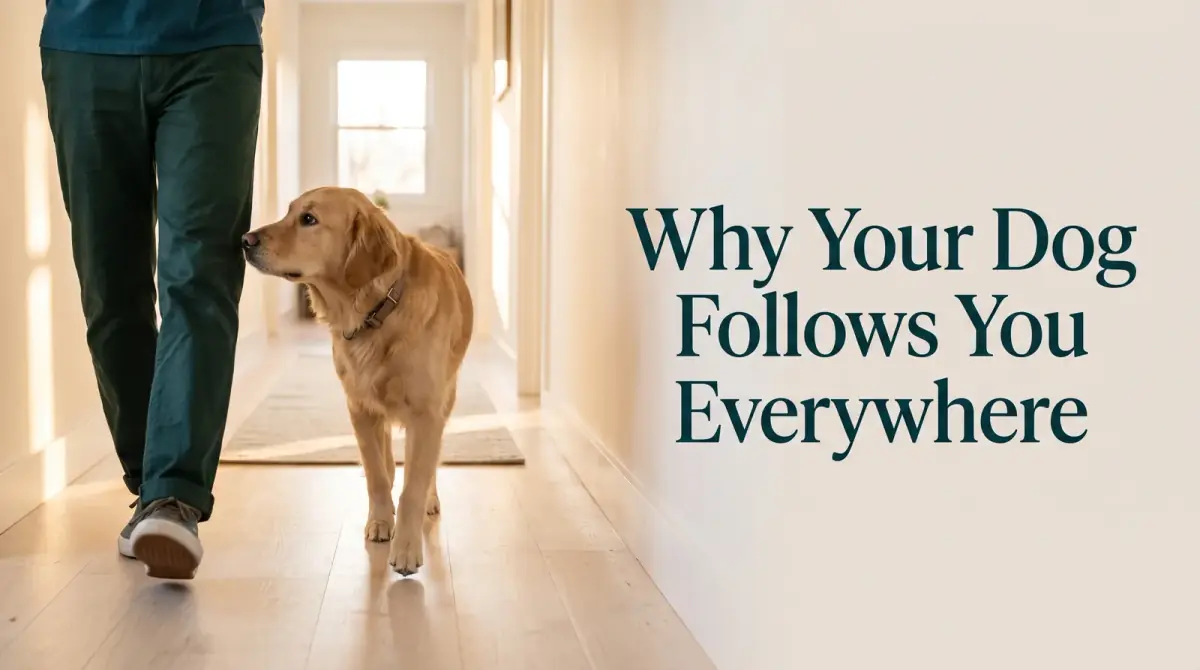
Your dog follows you everywhere mostly because dogs are social animals who bond deeply with their people, and staying close is how they feel safe and included. If you keep asking why does my dog follow me everywhere, the usual answer is simple attachment: you are their favorite person, their source of food and fun, and their sense of security. In most cases it is a sign of a healthy, trusting relationship rather than a problem.
That said, there is a difference between a happy shadow and a dog who cannot cope when you leave. Below we look at the loving reasons behind the habit, the breeds and situations that make it stronger, and the signs that hint at separation anxiety.
Key takeaways
- Following you is usually normal attachment and a sign of trust.
- Dogs are pack animals, so sticking with their group is instinctive.
- Some breeds and rescue dogs are naturally more clingy, or velcro, than others.
- Following becomes a concern only when your dog panics or struggles alone.
- Building gentle independence helps a clingy dog feel calmer.
So why does my dog follow me everywhere?
Dogs descend from animals that lived and hunted in groups, and that social wiring runs deep. To your dog, you are the center of the group, so staying near you is the natural default rather than a decision they think about.
You are also the source of nearly everything good in their day: meals, walks, play, and affection. It makes sense that they would keep you in sight. Following is often just your dog optimizing for the best possible outcome, which is being wherever you are.
It is usually love and trust
For most dogs, shadowing you is a compliment. It means they feel secure with you and want to be part of whatever is happening, even if that happening is only you folding laundry.
You can usually read this in their body language. A dog who follows you with a relaxed posture, soft eyes, and a loose tail is content, not anxious. They are choosing your company because it feels good, which is exactly what a strong bond looks like.
Velcro dogs and clingy breeds
Some dogs are simply born to stick close. Breeds developed to work alongside people, such as many herding and companion types, often have a strong urge to stay near their humans. This is sometimes affectionately called a velcro dog, because they seem attached to your side.
Other factors add to it too:
- Puppies naturally follow their caregiver as they learn about the world.
- Rescue dogs may cling more at first while they learn they are safe.
- Older dogs can become more attached as their senses change and they rely on you for reassurance.
- Dogs who get lots of positive attention learn that being near you pays off.
None of these are problems. They are just personality and history shaping how close your dog wants to be.
Reinforcement: you may be teaching it
Dogs repeat what works. If every time your dog follows you they get a treat, a pat, or a kind word, you are gently rewarding the habit without meaning to. Over time, following simply becomes their default because it has always paid off.
This is not something to feel guilty about. It is worth knowing, though, because the same principle helps if you ever want to encourage a little more independence. What you reward tends to grow.
When following crosses into anxiety
Here is the key distinction. A dog who chooses to be near you is relaxed. A dog with separation-related anxiety is not choosing so much as unable to cope with distance, and that looks and feels different.
The clearest clues show up when you are about to leave or have left. This is general guidance rather than a diagnosis, so treat anything concerning or persistent as a reason to consult your vet or a qualified behaviorist.
Watch for signs such as:
- Panic, whining, or pacing when you pick up your keys or head for the door.
- Barking, howling, or destructive behavior when left alone.
- House-training accidents that only happen during your absence.
- Trembling, drooling, or refusing food when separated from you.
- An inability to settle even briefly if you step into another room.
If several of these sound familiar, it is worth a professional conversation. Separation anxiety is genuinely distressing for a dog, and a vet or accredited trainer can help you address it kindly and effectively rather than leaving your dog to struggle.
How to build gentle independence
Whether your dog is mildly clingy or showing early signs of anxiety, the same calm approach helps. The goal is to teach your dog that being a little apart from you is safe and normal, in small, manageable steps.
- Reward calm moments when your dog settles on their own, rather than only when they follow.
- Practice short separations at home, stepping away for seconds and returning before any worry builds.
- Give your dog a comfortable spot of their own with a chew or puzzle toy.
- Keep departures and arrivals low-key, so coming and going feels unremarkable.
- Make sure they get enough exercise and mental stimulation, because a tired, satisfied dog settles more easily.
Go slowly and keep it positive. For most dogs this simply strengthens confidence. If real anxiety is involved, bring a professional in early rather than pushing through alone.
Your routine shapes the habit too
Dogs are creatures of pattern, and they notice yours closely. If your days are unpredictable, some dogs stick even closer, keeping watch so they do not miss a walk or a meal. A steady daily rhythm can actually help a clingy dog relax, because they learn what to expect and when.
Big changes matter as well. A house move, a new baby, a shift in your work hours, or a stretch of time away can all make a dog more clingy for a while. If you find yourself asking why does my dog follow me everywhere only after a recent upheaval, that context is usually the clue, and most dogs settle again as the new normal sinks in.
The bottom line
A dog who follows you around is usually just telling you, in the most direct way they can, that you are their whole world. For the majority of owners, it is a warm sign of a close and trusting bond.
Pay attention to how your dog acts when you are apart, not just when you are together. If they are relaxed, enjoy your loyal shadow. If they panic or cannot cope alone, a vet or qualified behaviorist can help you build calmer, happier time apart.
Comments
0 total