
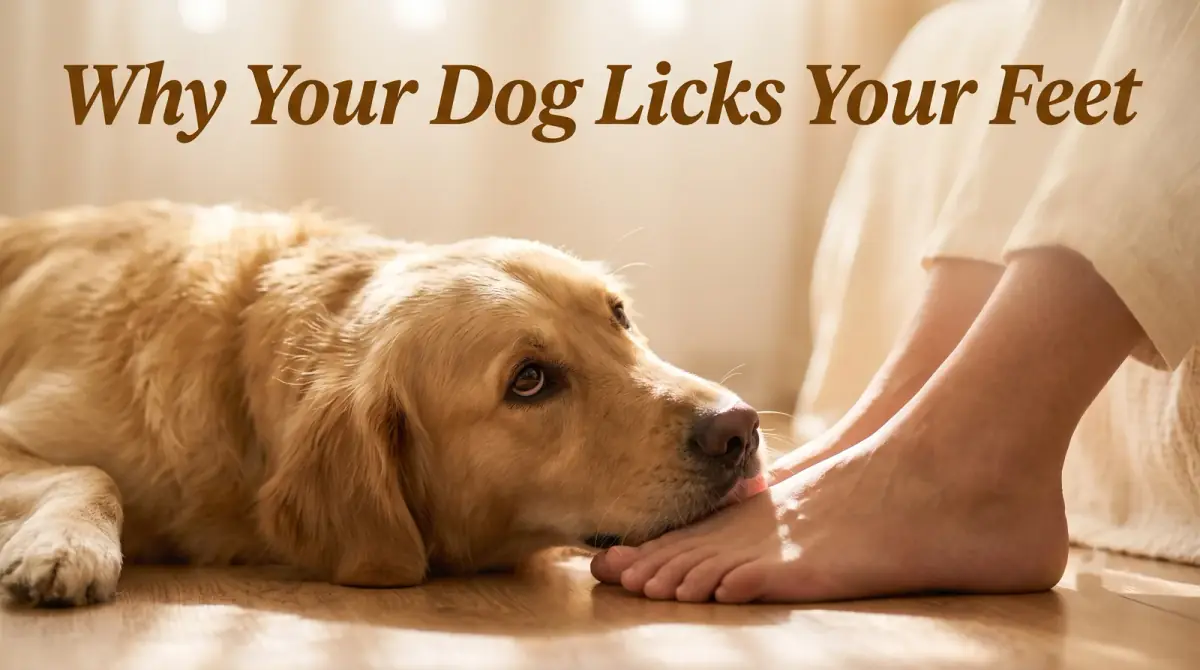
The short answer
That foot-licking habit is a little gross and a lot of love. Here is what it usually means, from salty skin to affection, and when to gently redirect it.
- Foot licking is usually driven by taste, scent, and affection, not by a problem.
- Salt and sweat on your skin make feet especially interesting to a curious dog.
- It can also be a learned bid for attention or a way to self-soothe.
- Occasional licking is normal, but sudden, frantic, or obsessive licking is worth watching.
- You can gently redirect the behavior without any punishment.
Your dog licks your feet mostly because they enjoy the salty taste and rich scent of your skin, and because licking is one of the main ways dogs show affection and learn about you. If you have ever quietly asked yourself why does my dog lick my feet, the honest answer is that it usually blends instinct, love, and plain curiosity. In the large majority of cases it is a harmless, even sweet, habit rather than a warning sign.
Feet also happen to be one of the most scent-heavy parts of the human body. To a dog, that makes them a rich source of information about where you have been and how you are feeling. Below we unpack the common reasons, plus the few moments when the habit is worth a second glance.
Key takeaways
- Foot licking is usually driven by taste, scent, and affection, not by a problem.
- Salt and sweat on your skin make feet especially interesting to a curious dog.
- It can also be a learned bid for attention or a way to self-soothe.
- Occasional licking is normal, but sudden, frantic, or obsessive licking is worth watching.
- You can gently redirect the behavior without any punishment.
So why does my dog lick my feet?
There is rarely a single reason. Dogs experience the world through their nose and mouth, so licking is both a greeting and a fact-finding mission. Your feet carry sweat, natural skin oils, and traces of everywhere you have walked, which is a lot of news packed into a small space.
On top of that, licking is a social behavior dogs learn as puppies. It says, in dog terms, that they trust you and want to connect. So when your dog homes in on your feet, they are often doing three things at once: tasting, gathering scent, and bonding.
It often comes down to taste and scent
Human skin is a little salty, especially after a warm day or a workout. Many dogs simply like that taste, and feet deliver it in a concentrated way. This is the most ordinary explanation, and for a lot of dogs it is the whole story.
Scent matters just as much. Your feet hold your personal smell more strongly than most other areas, and that familiar scent is reassuring to a dog. Because dogs read scent the way we read faces, a good long sniff and lick can feel to them like catching up with a close friend.
Licking as a sign of affection
In a litter, puppies lick their mother and each other to bond and to soothe. That instinct does not disappear as they grow. Directed at you, licking is often a clear signal of attachment and trust.
You will usually notice the context. If your dog licks your feet while relaxed, with a loose body and a gently wagging tail, it is affection more than anything. In short, it is one of the ways a dog says you are part of the family.
A clever bid for your attention
Dogs are quick to learn what gets a reaction from us. If licking your feet once made you laugh, talk to them, or reach down for a pat, they may have filed that away as a reliable trick. From then on, a lick can be less about taste and more about opening a conversation.
This is worth knowing, because it means your response shapes the habit. Big reactions, even mildly annoyed ones, can accidentally reward the behavior. Calm and consistent responses are far more useful, which we come back to below.
Comfort, stress relief, and habit
Licking releases a soothing, repetitive rhythm, a bit like a person tapping a foot or fidgeting when they think. Some dogs lick to wind down before a nap or to settle themselves during a slightly tense moment, such as a thunderstorm or an unfamiliar visitor.
For many dogs this is completely normal and even helpful. However, licking that seems driven, hard to interrupt, or tied to obvious anxiety is a different matter, and that is where paying attention pays off.
When foot-licking is worth a closer look
Most foot licking is harmless. Even so, a change in the pattern can occasionally point to something that deserves attention, and it is better to notice early than to guess. This is general guidance and not a diagnosis, so treat anything concerning or persistent as a reason to speak with your vet.
Consider checking in with a professional if you notice any of the following alongside the licking:
- The behavior appears suddenly and becomes intense or hard to stop.
- Your dog also licks their own paws, legs, or body far more than usual.
- There are signs of itchiness, redness, or skin irritation anywhere.
- The licking pairs with restlessness, poor appetite, or other changes in mood or routine.
- It looks compulsive, meaning your dog struggles to relax without doing it.
None of these mean something is definitely wrong. They are simply the moments when a quick word with your vet is sensible, because a professional can rule out allergies, discomfort, or anxiety that a home guess cannot.
How to gently discourage the habit
If the licking is fine but you would rather it stopped, you do not need punishment, which tends to create stress without solving anything. Redirection works far better and keeps the trust between you intact.
Here are a few calm, practical approaches:
- Quietly move your feet away and offer a chew toy or a puzzle feeder instead.
- Reward the calm behavior you want, such as settling nearby without licking.
- Avoid big reactions, since laughing or scolding can both read as attention.
- Give your dog more sniffing walks and play, so any boredom has a better outlet.
- Keep your response the same every time, because consistency is what teaches the new pattern.
Give it a couple of weeks. Habits fade slowly, so patience and repetition matter more than any single clever trick.
The bottom line
So the next time you catch yourself wondering why does my dog lick my feet, you can usually chalk it up to a quirky mix of taste, scent, and love, with nothing to fix. It is one of the small, slightly odd ways your dog stays close and keeps tabs on you.
Watch the context and the pattern. As long as your dog seems relaxed and healthy, you can simply enjoy it or gently redirect it. If anything about the habit worries you or does not settle, a short conversation with your vet will put your mind at rest.


Comments
0 total