
The short answer
A little paw licking is normal grooming, but constant licking is a signal worth reading. Here is why your dog keeps licking its paws and when to call the vet.
- Occasional paw licking is normal grooming and nothing to worry about.
- Constant licking of one paw often points to itch, irritation, or something stuck.
- Allergies to food, pollen, or grass are among the most common triggers.
- Licking can also be driven by boredom, anxiety, or plain habit.
- Redness, swelling, limping, or a bad smell means it is time to see a vet.
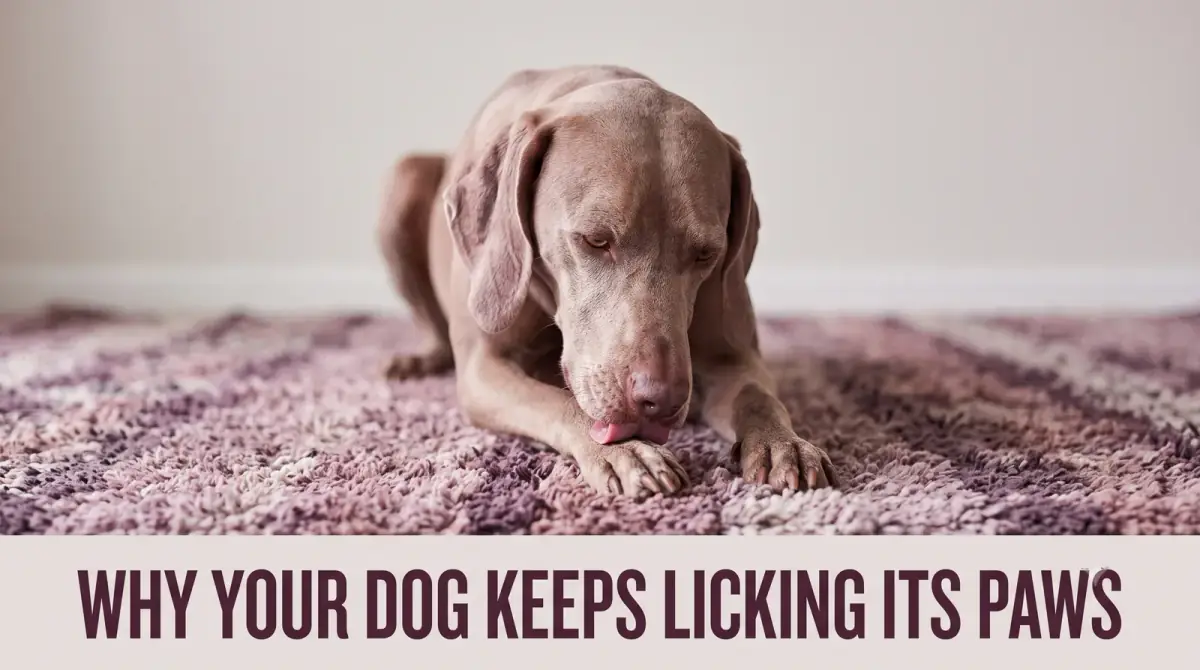
If you have watched your dog gnaw and lick at a paw over and over, you have probably wondered, why does my dog lick his paws so much? A little licking is simply part of normal grooming, but frequent, focused licking of the same paw usually means something is bothering him. The reasons range from itchy skin and allergies to dry weather, a trapped bit of debris, boredom, or stress, and the pattern of the licking often hints at the cause.
This article walks through the usual explanations and how to tell casual grooming from a habit worth watching. It is general information, not veterinary advice, so treat anything that is persistent, painful, or getting worse as a reason to call your vet.
Key takeaways
- Occasional paw licking is normal grooming and nothing to worry about.
- Constant licking of one paw often points to itch, irritation, or something stuck.
- Allergies to food, pollen, or grass are among the most common triggers.
- Licking can also be driven by boredom, anxiety, or plain habit.
- Redness, swelling, limping, or a bad smell means it is time to see a vet.
Is paw licking normal or a problem?
Dogs clean themselves far less than cats do, but a quick lick of the paws after a walk or before settling down to sleep is completely normal. It becomes a concern when the licking turns into a long, obsessive session, keeps returning to the same spot, or starts to leave the fur stained, damp, or thin.
A helpful test is to notice whether you can easily distract your dog from it. Casual grooming stops the moment something more interesting happens. Licking driven by itch or discomfort tends to pull your dog straight back to the paw, sometimes within seconds.
Why does my dog lick his paws? The common causes
There is rarely a single answer to why does my dog lick his paws, because several very different problems all show up the same way. Working through the likely causes one by one is the best way to narrow it down.
Allergies
Allergies are one of the most frequent reasons behind persistent dog paw licking. Dogs can react to things they eat as well as things in their surroundings, such as pollen, grass, dust, or mold. Itchy paws are a classic sign because the feet are in constant contact with the ground.
Irritants and the environment
Road salt in winter, lawn treatments, cleaning products, and even hot pavement can irritate the sensitive skin between the pads. A dog that has walked through something uncomfortable will often lick to soothe the sting.
Something stuck or an injury
A grass seed, a splinter, a tiny stone, or a small cut can lodge between the toes and drive a dog to lick that one paw intently. A cracked pad, a torn nail, or a bruise from rough ground can do the same.
Dry skin and parasites
Cold, dry air can leave paw pads chapped and flaky, and fleas, mites, or ticks can cause intense itching that a dog tries to relieve by licking. Because so many causes overlap, guessing is hard, which is why a vet visit matters when it does not settle quickly.
When paw licking is really about allergies
Allergy-related licking often follows a pattern. It may flare in spring and summer when pollen counts rise, or it may run all year if the trigger is something in the home or the food bowl. You might also notice licking or scratching elsewhere, such as the ears, belly, or face.
The paws are frequently the worst-hit area because they gather allergens on every walk. However, allergies are tricky to pin down at home, and the underlying itch usually needs a vet to identify and manage. Do not start any medicated shampoo, supplement, or human allergy medicine without professional guidance, because doses and safety vary a great deal for dogs.
Boredom, anxiety, and habit
Not all licking is about the skin. Some dogs lick their paws the way a person might bite their nails, as a way to self-soothe when they are bored, lonely, or anxious. This is more common in dogs left alone for long stretches or those without much to do.
Over time a soothing habit can become a hard-to-break loop, and constant licking can actually damage the skin and invite infection. If your dog seems physically fine but licks most when under-stimulated or stressed, the fix is often more exercise, company, and mental enrichment rather than a medical treatment. Even so, it is worth ruling out a physical cause first.
How to figure out what is going on
A bit of calm detective work at home gives your vet useful clues and sometimes solves the mystery on its own. Watch and note a few things over several days.
- Which paw? One paw suggests something local, like an injury or a stuck object. All four paws points more toward allergies or a whole-body cause.
- When? After walks, at night, when left alone, or only in certain seasons.
- How does the paw look? Check gently for redness, swelling, cuts, discoloration, or a smell.
- Any other signs? Scratching elsewhere, licking the belly, head shaking, or changes in appetite.
Because the licking itself can inflame the skin, it is easy for one problem to hide another. If nothing obvious stands out and the habit continues, that is exactly the situation a vet is best placed to sort out.
Simple things that can help at home
While you are working out the cause, a few gentle steps can keep your dog more comfortable without masking a real problem.
- Wipe the paws with a damp cloth after walks to remove pollen, salt, and grit.
- Check between the toes in good light for anything trapped, and remove it carefully if it is loose.
- Keep the fur between the pads trimmed and the nails at a comfortable length.
- Wash bedding regularly to cut down on dust and allergens.
- Give your dog plenty of exercise and things to chew or solve, especially if boredom seems to play a part.
These are comfort measures, not cures. Avoid bitter sprays, cones, or medicines unless your vet has recommended them, since forcing a dog to stop licking without addressing the reason rarely lasts.
When to see a vet about paw licking
Some paw licking clears up on its own once you remove a stray grass seed or the weather changes. Other times it is the visible tip of something that needs proper care. Book a vet visit if you notice any of the following.
- Licking that is constant, obsessive, or clearly interfering with rest.
- Redness, swelling, bleeding, or a discharge from the paw.
- A yeasty or unpleasant smell, which can point to infection.
- Limping, tenderness, or reluctance to put weight on the paw.
- Licking that lasts more than a few days or keeps coming back.
In short, a stray lick now and then is nothing to fear, but a paw your dog cannot leave alone is worth taking seriously. Your vet can look for the real cause and get your dog comfortable again, which is far kinder than letting a small irritation grow into a stubborn one.

Comments
0 total