
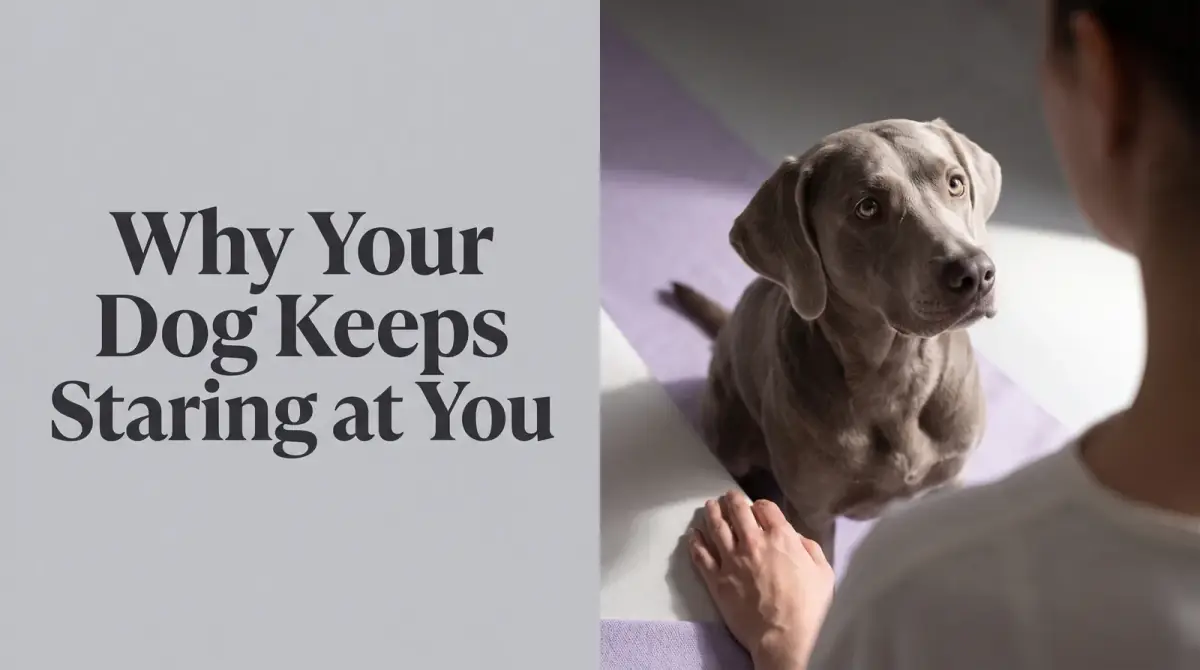
The short answer
That intense gaze is your dog talking to you. Here is how to decode the staring, from love and hunger to a polite request you may have been missing.
- Staring is usually a form of communication and connection, not a challenge.
- A soft, relaxed gaze often signals affection and trust.
- Dogs frequently stare to ask for food, walks, or attention.
- They also watch you closely to predict what you will do next.
- Context and body language tell you what a particular stare means.
Your dog stares at you mostly to communicate, whether that means asking for something, reading your next move, or simply soaking up affection. If you have wondered why does my dog stare at me, the short answer is that eye contact is one of your dog's main tools for connecting with you and getting your attention. Most of the time that intense gaze is a good thing, a sign of a bond rather than anything to worry about.
Of course, a stare can mean several different things depending on the moment and your dog's body language. Below we decode the most common reasons, from love and hunger to a polite request you may have been missing.
Key takeaways
- Staring is usually a form of communication and connection, not a challenge.
- A soft, relaxed gaze often signals affection and trust.
- Dogs frequently stare to ask for food, walks, or attention.
- They also watch you closely to predict what you will do next.
- Context and body language tell you what a particular stare means.
So why does my dog stare at me?
Dogs are expert people-watchers. Over thousands of years living alongside humans, they have become finely tuned to our faces, gestures, and routines. Staring is part of how they read us and stay in sync with what we are doing.
So a stare is rarely random. Your dog is usually gathering information, expressing something, or waiting for a response. The trick is learning to tell those apart, which gets easier once you know what to look for.
A loving gaze and the bonding effect
Sometimes a stare is pure affection. When your dog looks at you with soft eyes, a relaxed face, and a calm body, they are simply enjoying being with you. This gentle eye contact is thought to strengthen the bond between dogs and their people, a quiet exchange that feels good on both sides.
You can usually feel the difference. A loving gaze is warm and unhurried, often paired with a slow blink or a content sigh. There is no tension in it, just connection.
They are asking for something
Dogs are practical, and staring is a wonderfully effective way to make a request. If your dog fixes you with a hopeful look near dinnertime, by the door, or beside the treat cupboard, the message is not subtle: they want something, and they have learned that looking at you often works.
Common requests behind a stare include:
- Food or a treat, especially around mealtimes or while you are eating.
- A walk or a trip outside to the garden.
- Play, a cuddle, or simply your attention.
- A door opened or a toy retrieved from under the sofa.
Because staring so often gets a response from us, dogs quickly learn to rely on it. In a sense, they have trained us as much as we have trained them.
Reading your body language
Dogs watch us for clues about what happens next. They learn that certain movements predict good things, so they keep an eye on you to catch the signals early. Reaching for your shoes, picking up a lead, or heading toward the kitchen can all trigger that intent focus.
This is your dog being smart, not demanding. They are simply trying to stay one step ahead so they do not miss out on a walk, a meal, or a game. The closer your bond, the more attentively they tend to watch.
Waiting for direction or reassurance
Well-socialized dogs often look to their people for guidance, especially in new or slightly uncertain situations. A stare in a busy park or when a stranger arrives can be your dog checking in, asking in effect whether everything is all right.
This is a lovely sign of trust. It means your dog sees you as their steady point of reference. Responding with calm, relaxed energy tells them there is nothing to worry about, and that reassurance helps them settle.
When a stare is worth a second look
The vast majority of staring is friendly and normal. Occasionally, though, a change in how or when your dog stares can be worth noticing, and it is better to pay attention than to assume. This is general guidance, not a diagnosis, so treat anything concerning or persistent as a reason to consult your vet.
Use body language as your guide. A relaxed dog with soft eyes is very different from a tense one. Consider a closer look, and a word with your vet, if you notice things like:
- A rigid, hard stare paired with a stiff body, which can signal discomfort or unease.
- Blank staring into space, at walls, or at nothing in particular.
- Staring that appears suddenly alongside confusion, restlessness, or other changes.
- Signs your dog seems unwell, in pain, or not themselves in general.
A hard, fixed stare with tense posture can also be a warning sign in an unfamiliar dog, so it is wise to give space rather than meet the gaze head-on. With your own dog, any sudden or out-of-character change is simply a cue to check in with a professional.
How to respond to your dog's stare
Once you can read the context, responding becomes easy and even fun. The aim is to reward the behavior you like and gently avoid feeding the habits you do not.
- Return a loving gaze with calm affection, a soft voice, or a slow blink.
- Meet reasonable requests, but avoid rewarding constant begging at the table.
- Teach a cue, so your dog learns to sit or settle instead of only staring for what they want.
- Offer reassurance with relaxed body language when your dog is checking in with you.
- Give plenty of exercise and enrichment, so attention-seeking stares have less fuel.
In short, a stare is an invitation to communicate, and how you answer shapes what your dog learns to do next.
The bottom line
So if you keep asking why does my dog stare at me, the answer is almost always connection. Most of the time your dog is telling you they love you, need something, or are trying to read your next move, and it is one of the clearest ways they stay linked to you throughout the day.
Let the situation and your dog's body language guide your reading of any particular gaze. If a stare ever seems tense, blank, or out of character, or your dog otherwise seems unwell, a quick conversation with your vet is the sensible next step.
Comments
0 total