
The short answer
Grass-eating is common and usually harmless, but not always. Here is why your dog grazes, whether it is a stomach thing, and the signs it is time to call the vet.
- Grass-eating is common in healthy dogs and often means very little.
- Taste, texture, boredom, and instinct are the usual reasons.
- The idea that dogs eat grass only to make themselves sick is largely a myth.
- Watch out for grass treated with chemicals, which can be harmful.
- Frequent, sudden, or frantic grazing with other symptoms is a reason to see your vet.
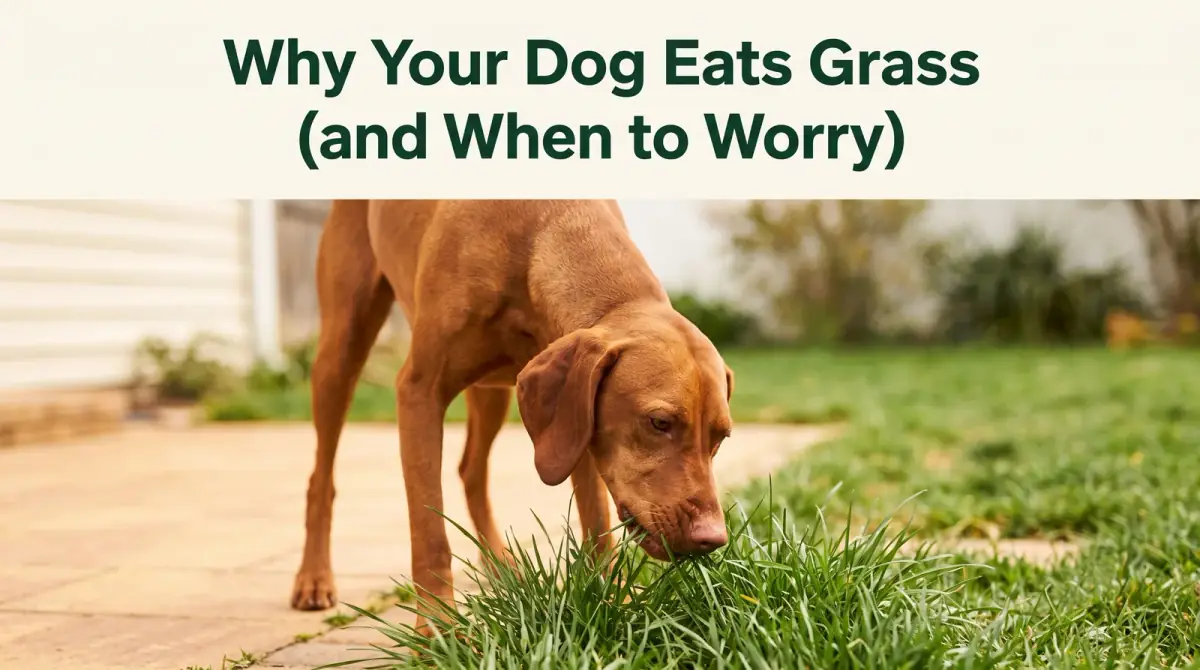
Your dog eats grass for a mix of ordinary reasons: they like the taste and texture, they are a little bored, or they are following a natural instinct. If you are wondering why does my dog eat grass, the reassuring news is that grazing is very common and usually harmless. Most dogs nibble grass now and then and are completely fine, though there are a few situations where it is worth a closer look.
Below we walk through the everyday explanations, clear up the old myth that grass always means an upset stomach, and lay out the specific signs that mean it is time to call your vet.
Key takeaways
- Grass-eating is common in healthy dogs and often means very little.
- Taste, texture, boredom, and instinct are the usual reasons.
- The idea that dogs eat grass only to make themselves sick is largely a myth.
- Watch out for grass treated with chemicals, which can be harmful.
- Frequent, sudden, or frantic grazing with other symptoms is a reason to see your vet.
So why does my dog eat grass?
There is no single answer, and that is fine. For most dogs, grazing is just a normal part of exploring the world with their mouth, much like sniffing every lamppost on a walk. Grass is fresh, available, and interesting, so many dogs give it a try.
Researchers and vets generally agree that occasional grass-eating in an otherwise healthy dog is not a cause for alarm. It is one of those slightly odd but usually harmless things that many dogs simply do.
They like the taste and texture
Sometimes the simplest explanation is the right one. Fresh grass, especially the tender new growth in spring, has a taste and crunch that some dogs clearly enjoy. They are not trying to solve a problem; they just like it.
Dogs are natural scavengers, and their ancestors ate a varied diet that included plant matter. So a taste for greenery is not strange at all. For many dogs, a bit of grass is basically a snack they happen to find pleasant.
Boredom and the need for stimulation
Grass can also be an outlet for a dog who needs more to do. A dog left in the garden with little to occupy them may start grazing simply to pass the time, in the same way a bored person might nibble without being hungry.
If you suspect boredom, more walks, training games, and chew toys often reduce the grazing on their own. A dog with plenty of physical and mental exercise usually has less reason to graze out of restlessness.
Instinct and diet curiosity
Some grass-eating is likely just instinct handed down from ancestors who ate whatever their prey had been eating, greenery included. It is woven into normal canine behavior rather than being a sign that something is missing.
People sometimes assume grazing means a dog is short on fiber or nutrients. That can occasionally play a part, but for most dogs on a complete, balanced diet it is not the driver. If you ever have questions about your dog's nutrition, that is a good thing to raise with your vet rather than guess at.
It also helps to remember that dogs use their mouths to investigate almost everything, from sticks to shoes. Grass is just another texture to explore, and a curious dog may sample it for no deeper reason than that it is there. In that sense, asking why does my dog eat grass is a bit like asking why they sniff every corner: it is simply how they get to know their surroundings.
Does grass really settle an upset stomach?
This is the classic theory: that dogs eat grass to make themselves vomit when they feel unwell. It is a persistent idea, but the evidence does not really support it as the main reason.
Most dogs who eat grass do not vomit afterward, and many seem perfectly well before and after grazing. In other words, most grass-eating is not about feeling sick. A dog who is clearly unwell and then eats grass is a different situation, and that is more about the underlying illness than the grass itself.
When grass-eating means call your vet
Grazing is usually harmless, but a few patterns do warrant attention, and it is always better to check than to worry. This is general guidance and not a diagnosis, so treat anything concerning or persistent as a reason to consult your vet. Trust your instinct: if your dog does not seem right, get them looked at.
Consider contacting your vet if you notice any of the following:
- A sudden, sharp increase in grass-eating, especially if it seems frantic or urgent.
- Repeated vomiting, diarrhea, or signs of a genuinely upset stomach.
- Loss of appetite, low energy, or a dog who is simply not themselves.
- Any sign of pain, bloating, or distress while or after grazing.
- Compulsive grazing that is hard to interrupt or that replaces normal eating.
These signs do not always mean something serious, but they are the moments when a professional should take a look. Your vet can check for issues such as digestive upset, dietary problems, or other conditions that a home guess cannot rule out.
Keeping grazing safe
If your dog is a happy, healthy grazer, you may not need to stop them at all. What matters more is making sure the grass they reach is safe. A few sensible precautions go a long way.
- Avoid lawns and verges treated with pesticides, herbicides, or fertilizers, which can be toxic.
- Keep your dog away from grass in areas that may have been chemically treated, such as some parks and roadsides.
- Learn which common plants and flowers are poisonous to dogs, and steer clear of them.
- Provide plenty of exercise, enrichment, and chew options to curb boredom grazing.
- Talk to your vet about diet if you think nutrition might be a factor.
With those basics covered, the occasional mouthful of clean, untreated grass is rarely something to lose sleep over.
The bottom line
For most dogs, eating grass is a normal, mostly harmless habit driven by taste, boredom, or instinct rather than illness. A little grazing on safe, untreated grass is usually nothing to worry about.
Keep an eye on the pattern and on your dog's overall health. If the grazing suddenly ramps up, comes with vomiting or other symptoms, or your dog just seems off, do not wait it out. A quick call to your vet is the safest way to be sure.



Comments
0 total