
The short answer
It is a mix of warmth, trust, and a little instinct. Here is why your cat sleeps on your chest and what this cozy habit quietly says about the bond you share.
- Your chest is warm, and cats are drawn to the coziest spot they can find.
- Sleeping on you is a strong sign of trust and attachment.
- The rhythm of your breathing and heartbeat can be soothing.
- Your scent marks you as safe and familiar territory.
- The habit is usually healthy, but comfort and good sleep for both of you still matter.
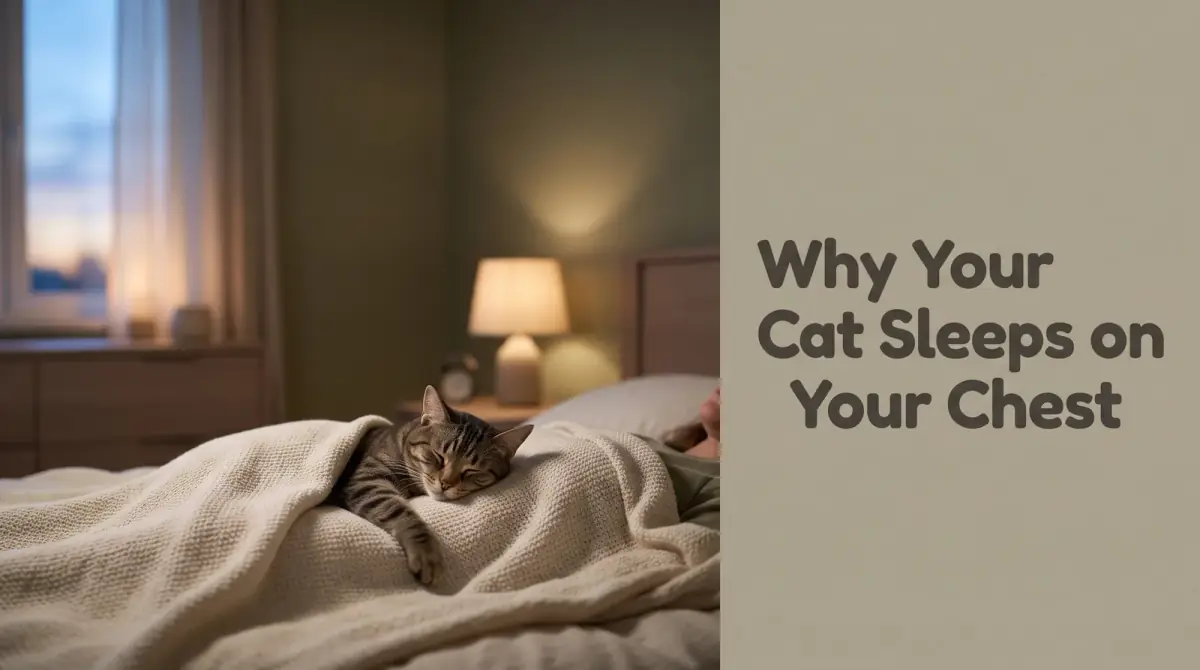
If you wake up most nights with a warm, purring weight settled over your heart, you may wonder, why does my cat sleep on my chest? The short answer is that your chest offers the perfect combination of warmth, gentle movement, familiar scent, and safety, and choosing to sleep there is one of the clearest signs that your cat trusts you. What looks like a simple cuddle is really a mix of comfort-seeking and quiet affection.
Below we unpack the cozy reasons behind the habit, what it says about your bond, and a few practical notes for when the chest becomes your cat's favorite bed a little too often. It is a sweet behavior, so most of this is about understanding it rather than changing it.
Key takeaways
- Your chest is warm, and cats are drawn to the coziest spot they can find.
- Sleeping on you is a strong sign of trust and attachment.
- The rhythm of your breathing and heartbeat can be soothing.
- Your scent marks you as safe and familiar territory.
- The habit is usually healthy, but comfort and good sleep for both of you still matter.
Why does my cat sleep on my chest?
When owners ask why does my cat sleep on my chest rather than the perfectly good bed beside them, the answer is that you offer things a cushion never can. You are warm, you move gently as you breathe, you smell familiar, and you feel safe. For a cat, that is close to the ideal place to switch off and rest.
Cats spend a huge part of the day asleep, and where they choose to sleep says a lot. A cat sleeps most deeply where it feels secure, and picking the middle of your chest, close to your face and hands, is a vote of confidence in you.
Warmth is the first draw
Cats love heat. Their comfortable temperature runs a little warmer than ours, which is why you find them curled in sunbeams, on radiators, and on freshly laundered laundry. Your chest and torso give off a steady, gentle warmth all night long.
The chest is one of the warmest, most stable parts of the body to rest against, and it does not cool down the way a spot on the sofa does once your cat leaves it. From a purely practical view, your cat has simply found the best heated bed in the house, and it happens to be you.
Trust, safety, and the bond you share
Warmth explains the where, but not always the who. A cat that could warm up anywhere but chooses to sleep on you is showing trust. Sleep is a vulnerable state, so a cat that dozes off on your chest is telling you it feels protected in your company.
This ties back to kittenhood, when kittens pile together and against their mother for warmth and security. Curling up on you can echo that early sense of safety, with you standing in for the warm, breathing presence they instinctively seek. In everyday terms, it is one of the fondest compliments a cat can pay.
Signs your cat feels safe with you
- Slow blinking or half-closed eyes as it settles.
- Steady purring and a relaxed, loose body.
- Kneading with the paws before lying down.
- Choosing you over other warm spots in the room.
The comfort of your heartbeat and breathing
There is a soothing side to your chest beyond the heat. The slow, rhythmic rise and fall of your breathing and the steady beat of your heart create a gentle, predictable motion that many cats seem to find calming.
Some people believe this rhythm is comforting because it echoes the closeness of a mother's body, and while we cannot ask cats directly, the calming effect is easy to observe. A cat that arrives tense and then melts into a deep, purring sleep on your chest is clearly finding something restful there.
Scent, territory, and marking you as home
Cats live in a world shaped by smell, and yours is one of the most reassuring scents they know. By sleeping on your chest, your cat wraps itself in your familiar scent and, at the same time, mingles its own scent with yours.
This scent-swapping is part of how cats build a sense of belonging. In effect, your cat is claiming you as part of its safe, familiar territory. It is not about ownership in a bossy sense, but about weaving you into the small circle of things that mean home and security.
Does the exact spot on you mean anything?
Cats are choosy about where they settle, and the location often reflects a small trade-off between warmth, security, and closeness. The chest sits right in the sweet spot, warm and central, and near enough to your face for your cat to feel connected to you.
Some cats prefer to curl at your feet or against your side instead, which tends to mean they still want your company but value a little more independence or an easier exit. Others tuck in by your neck or shoulder, chasing the extra warmth there. None of these choices is better or worse, they simply reflect each cat's own balance of comfort and confidence. If your cat moves around from night to night, that is perfectly normal too, and usually a sign of a relaxed cat that feels at home wherever it lands.
Should you let your cat sleep on your chest?
For most people the habit is harmless and rather lovely, so whether to allow it comes down to your own comfort and sleep. If you both rest well, there is no reason to stop. A few gentle points are still worth keeping in mind.
- Heavy cats or restless sleepers can disturb your sleep, so it is fine to set limits.
- If you have allergies or breathing trouble, a cat on the chest may not be ideal for you.
- Be gentle if you need to move your cat, and offer a warm alternative bed nearby.
If you would rather redirect the habit, a heated or soft bed placed close to you, ideally somewhere warm, can tempt your cat to settle beside you instead of on top of you. Reward it for using the new spot rather than scolding it for the old one.
When a change in cuddling is worth noticing
Most chest-sleeping is simply about love and warmth, but any sudden, marked change in your cat's behavior is worth a second look. A cat that abruptly becomes far clingier, or one that stops seeking closeness it always enjoyed, may be reacting to stress or discomfort. This is general guidance, not a diagnosis.
If a shift in cuddling comes with other changes, such as altered eating, hiding, restlessness, or signs of pain, mention it to your vet so anything medical can be ruled out. Otherwise, you can simply enjoy it. A cat asleep on your chest is trusting you with its most defenseless moments, and that quiet vote of confidence is a small gift worth savoring.
Comments
0 total