
The short answer
Cats sleep for a huge part of the day, and usually that is completely normal. Here is why your cat sleeps so much, what shapes the habit, and the changes worth a vet chat.
- Sleeping much of the day is normal, healthy cat behaviour.
- Cats are wired to conserve energy between short bursts of activity.
- Age, weather, and boredom all influence how much a cat sleeps.
- A sudden, marked change in sleep is the part worth watching.
- When in doubt about your cat's health, ask your vet.
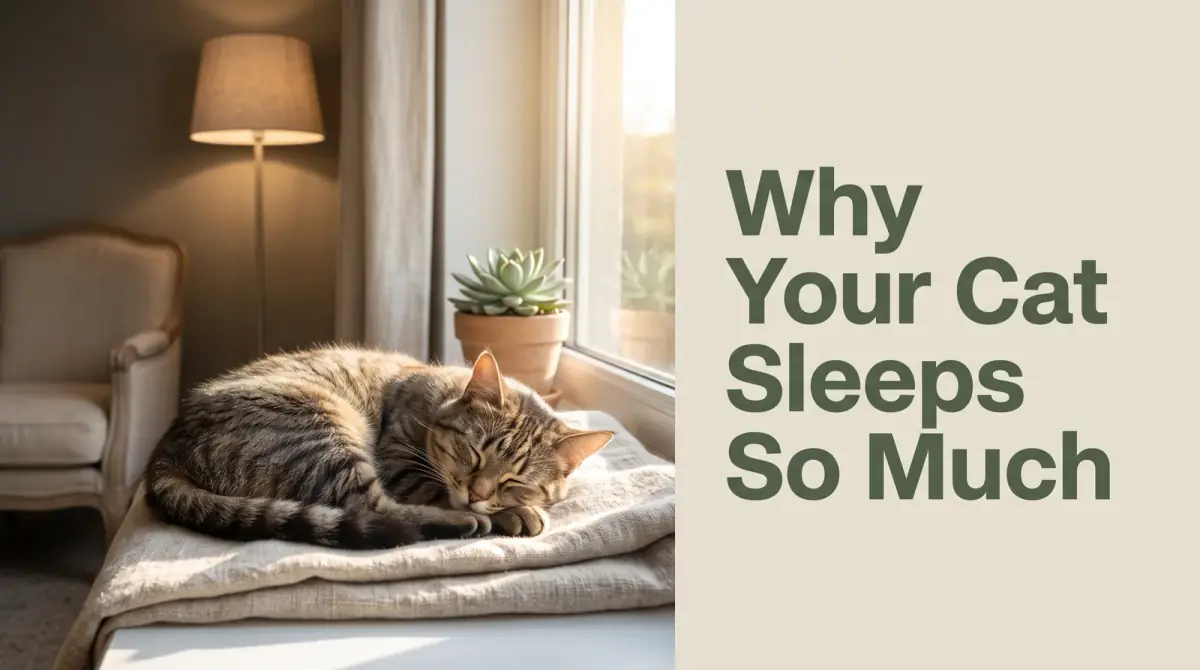
If you have ever asked why does my cat sleep so much, the reassuring answer is that long stretches of sleep are completely normal for cats. Most cats spend a large part of the day and night dozing, a habit rooted in their biology as hunters rather than a sign that something is wrong. In most cases, a sleepy cat is simply a healthy cat doing exactly what cats are built to do.
This is general information, not veterinary advice. Sleep patterns vary from cat to cat, so if your cat's habits change suddenly or you feel something is off, it is always worth mentioning to your vet.
Key takeaways
- Sleeping much of the day is normal, healthy cat behaviour.
- Cats are wired to conserve energy between short bursts of activity.
- Age, weather, and boredom all influence how much a cat sleeps.
- A sudden, marked change in sleep is the part worth watching.
- When in doubt about your cat's health, ask your vet.
How much do cats sleep, really
Cats are famous for their napping, and for good reason. It is completely normal for a cat to spend the majority of any twenty four hour period asleep or resting, far more than we humans do.
Kittens and older cats tend to sleep even more than that. So if it feels like your cat is asleep every time you glance over, you are almost certainly seeing ordinary cat behaviour rather than anything unusual.
Why does my cat sleep so much
The main reason your cat sleeps so much comes down to instinct. Cats are natural hunters, and hunting takes intense bursts of energy, so their bodies are built to rest deeply between those bursts and conserve fuel for the next one.
Even though your indoor cat is not chasing prey across a field, that ancient wiring remains. Sleeping through the quiet hours and saving energy for short, active spells is simply how a cat's body prefers to run.
Energy conservation
A wild cat cannot count on a full food bowl, so resting between hunts is a survival strategy. Your pampered housecat keeps the very same rhythm purely out of instinct.
Crepuscular timing
Cats are naturally most active around dawn and dusk. That means much of their sleeping happens through the middle of the day and the depths of the night, which can look like constant napping to us.
Not all cat sleep is deep sleep
Part of the reason cats seem to sleep so much is that a lot of that time is light dozing rather than deep sleep. A cat in a light doze can wake in an instant, ears still swivelling toward sounds, ready to react to anything interesting.
Only a smaller portion of their rest is the deep, restorative kind. This blend of light and deep sleep is why a cat can nap on a sunny sill yet still spring up the very moment the treat drawer opens.
Should you wake a sleeping cat
If you have wondered why does my cat sleep so much and whether you ought to nudge it awake, the general answer is to let a resting cat rest. Sleep is when a cat recharges, processes the day, and keeps its body ticking over, so interrupting it too often can leave your cat cranky and unsettled.
Instead of waking your cat for company, invite activity at the times it is naturally alert, such as early morning and evening. A short play session then works with your cat's rhythm rather than against it, and it usually leads to a calmer, more contented sleeper afterwards.
What affects your cat's sleep habits
Several everyday factors shape a cat's sleep habits, and most are nothing to worry about. Recognising them helps explain why the amount your cat sleeps can shift from one week to the next.
- Age. Kittens and senior cats sleep more than young adults.
- Weather. Many cats sleep more on cold, grey, or rainy days.
- Boredom. With little to do, a cat may nap simply to pass the time.
- Routine. Cats adjust their sleep around your household and feeding times.
- A big meal. Like us, cats often feel drowsy after eating well.
Because so many harmless things influence sleep, a cat sleeping a lot on a wet winter afternoon is usually just being sensible.
Could my cat be bored rather than tired
Sometimes a cat sleeping a lot is less about needing rest and more about having nothing better to do. An understimulated indoor cat may sleep out of boredom, and over time that extra napping can tip into weight gain.
The fix here is enrichment rather than worry. Short play sessions, a window view, climbing spaces, and puzzle feeders all give a cat reasons to stay awake and active, which supports both a healthy weight and a brighter mood.
When sleeping a lot might be worth a vet visit
Long hours of sleep are normal, but a clear change from your cat's usual pattern is the thing to watch. It is not the total amount that matters most, it is a shift away from what is normal for your particular cat.
Mention it to your vet if you notice sleep changes alongside signs such as these:
- Hiding away far more than usual or seeming withdrawn.
- Eating or drinking noticeably more or less.
- Trouble getting comfortable, stiffness, or reluctance to jump.
- Weight loss or gain, or a dull, unkempt coat.
- Lethargy that seems severe, sudden, or persistent.
None of these means something is definitely wrong, but together with a change in sleep they are worth a professional opinion. A vet can tell the difference between a contented napper and a cat that needs a checkup far better than guesswork can.
How to support healthy cat sleep habits
You do not need to fight a cat's natural love of sleep, but you can help it rest well and stay active when awake. A few small adjustments go a long way toward healthy cat sleep habits.
- Offer a warm, quiet, cosy spot where your cat can nap undisturbed.
- Play together each day to satisfy the hunting instinct and burn energy.
- Feed on a consistent schedule so activity and rest settle into a rhythm.
- Provide vertical space and window views for daytime stimulation.
- Keep a loose eye on the pattern so you notice any real change early.
With those basics in place, you can relax about all that sleeping. For the most part, a cat that naps the day away is not lazy or unwell, it is simply being a cat, and that is exactly as it should be.

Comments
0 total