
The short answer
Both can leave leaves yellow and drooping, which is why so many people guess wrong. Here is how to tell overwatering vs underwatering apart and rescue your plant.
- Check the soil first: wet means overwatered, dry means underwatered.
- Overwatered leaves feel soft and mushy; underwatered leaves feel crisp.
- Yellow, dropping leaves often mean too much water.
- Brown, crispy edges often mean too little water.
- Overwatering is the more dangerous of the two to leave untreated.
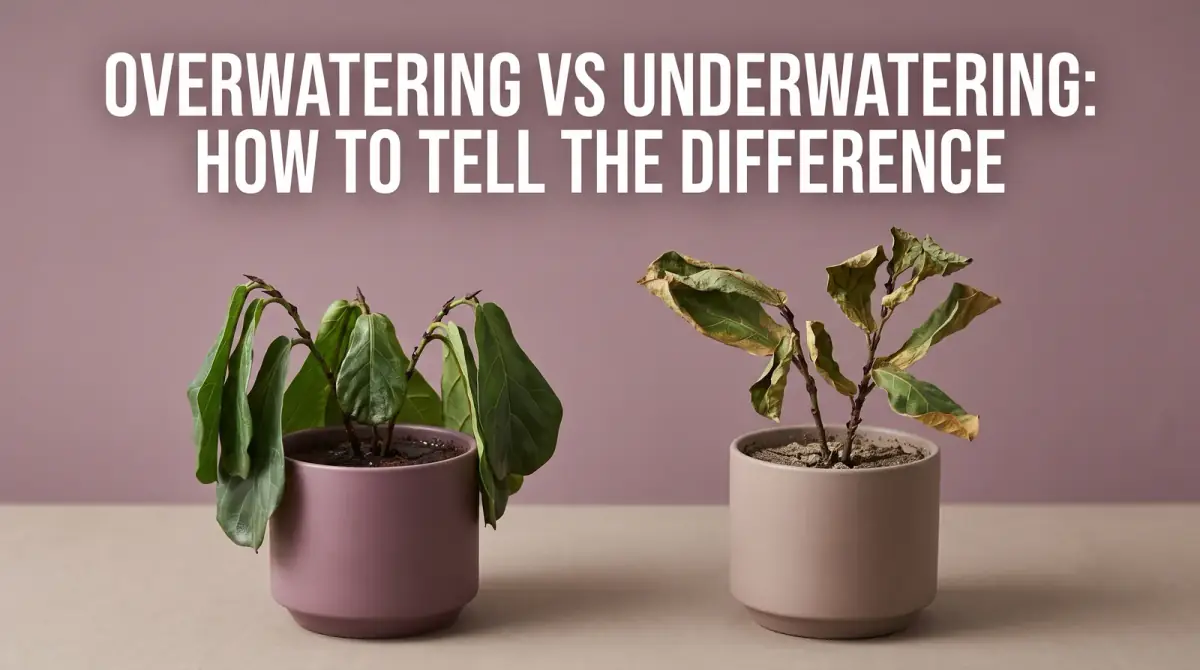
The confusing thing about overwatering vs underwatering is that they can look almost identical: droopy, yellowing leaves and a plant that clearly is not happy. The reliable way to tell them apart is to feel the soil. Wet, heavy soil with soft, mushy leaves points to overwatering, while bone-dry soil with crisp, brittle leaves points to underwatering. The finger test settles the question faster than staring at the leaves ever will.
Because the two problems call for opposite fixes, guessing wrong makes things worse. A thirsty plant given even more water, or a drowning plant left to sit in soggy soil, will only decline faster. So it is worth learning to read the signs correctly.
Key takeaways
- Check the soil first: wet means overwatered, dry means underwatered.
- Overwatered leaves feel soft and mushy; underwatered leaves feel crisp.
- Yellow, dropping leaves often mean too much water.
- Brown, crispy edges often mean too little water.
- Overwatering is the more dangerous of the two to leave untreated.
Overwatering vs underwatering: the fastest test
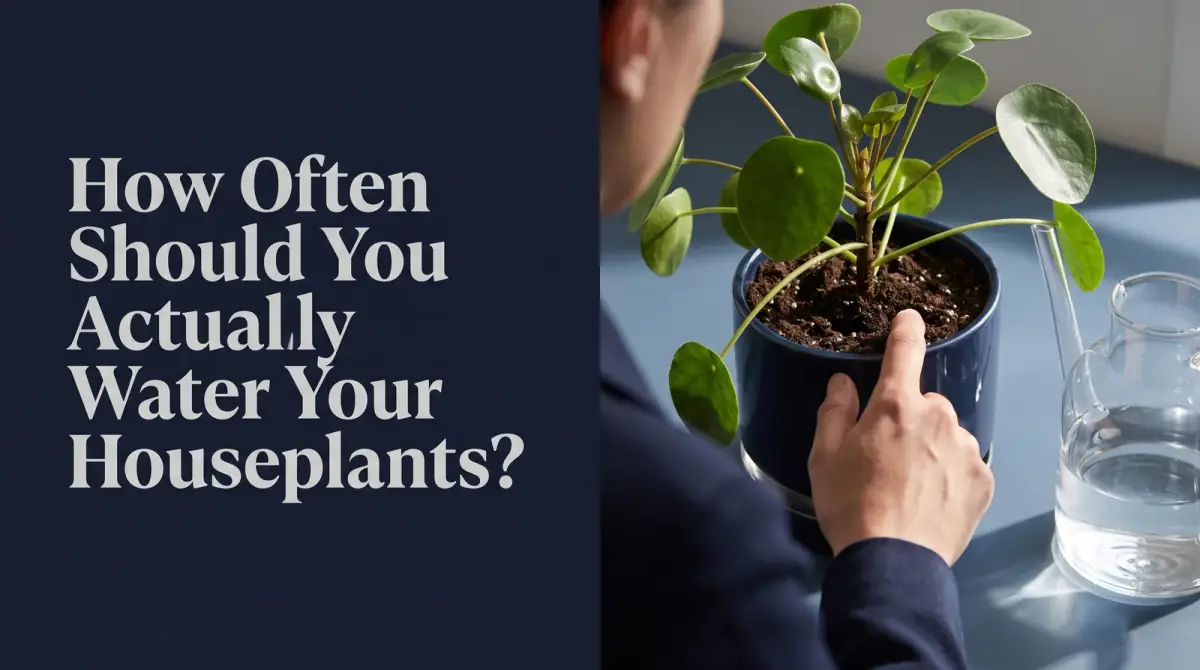
When a plant looks distressed, resist the urge to reach for the watering can. Instead, push a finger an inch or two into the soil and pay attention to what you feel. This one habit prevents most watering mistakes.
If the soil is damp, cool, and clings to your skin, the plant has plenty of water and the problem is likely too much of it. If the soil is dry, dusty, and pulling away from the sides of the pot, the plant is thirsty. Lifting the pot helps too, because a waterlogged pot feels surprisingly heavy while a parched one feels light.
Signs of overwatering
Overwatering is the more common killer of houseplants, largely because it looks like care. The trouble is that constantly wet soil starves roots of oxygen and invites rot, so the plant slowly suffocates from below.
Common signs of overwatering include:
- Yellowing leaves, often starting with the lower ones.
- Soft, mushy, or limp foliage that feels waterlogged.
- Leaves dropping even while they still look green.
- A musty smell or mold on the soil surface.
- Brown, mushy roots instead of firm white ones.
A telltale clue is that the plant droops while the soil is still wet. That combination almost always means the roots are struggling, not thirsty, and it should push you toward drying out rather than watering.
Signs of underwatering
An underwatered plant is usually easier to rescue, because thirst is quicker to fix than root rot. Still, chronic dryness weakens a plant over time, so it is worth catching early.
Common signs of underwatering include:
- Dry, crispy leaves with brown, brittle edges or tips.
- Wilting that firms back up soon after a good drink.
- Curling leaves as the plant tries to save moisture.
- Slow growth and leaves that drop while dry and papery.
- Soil pulling away from the edge of the pot.
The key contrast is texture. Where an overwatered leaf feels soft and squishy, an underwatered leaf feels dry and papery. For example, a crunchy brown edge you can crumble between your fingers points firmly to thirst.
Is my plant over or under watered? A quick comparison
When you are still unsure whether your plant is over or under watered, it helps to line the clues up side by side. The same symptom can appear in both, so it is the combination that gives you the answer.
Feel the leaves
Soft and limp suggests too much water. Crisp and brittle suggests too little. This texture difference is one of the most reliable tells.
Feel the soil
Wet or soggy confirms overwatering. Dry and dusty confirms underwatering. Always trust the soil over the leaves, because leaves can mislead you.
Watch the timing
A plant that perks up within hours of watering was thirsty. A plant that stays droopy no matter what, in wet soil, is almost certainly overwatered.
How to fix an overwatered plant
If you have diagnosed overwatering, the goal is to help the soil dry and give the roots air. Move quickly, because root rot spreads if the plant keeps sitting in water.
- Stop watering and move the plant somewhere brighter and airier.
- Empty any saucer so the pot is never standing in water.
- If it smells rotten, slide the plant out and check the roots.
- Trim away any brown, mushy roots with clean scissors.
- Repot into fresh, well-draining soil and water only once it dries.
From here on, wait until the top inch of soil is dry before watering again. Most plants prefer a thorough drink followed by a dry spell to a constant trickle of moisture.
How to fix an underwatered plant
Reviving a thirsty plant is usually simple and satisfying, since many bounce back within a day. The main thing is to rehydrate the soil evenly rather than splashing a little on top.
If the soil has gone very dry and hard, water often runs straight down the sides without soaking in. In that case, sit the whole pot in a basin of water for half an hour so the soil can absorb moisture from the bottom up. Then let it drain fully and return it to its spot. After a deep soak like this, a wilted plant will often stand tall again by the next morning.
Why overwatering is the bigger risk
If you have to err in one direction, err toward too little water. A thirsty plant sends clear signals and usually recovers fully once you rehydrate it. An overwatered plant, by contrast, hides its trouble underground, where roots quietly rot before the leaves ever show it.
This is why so many houseplants are loved to death rather than neglected to death. Watering feels like caring, so it is easy to overdo. Because root rot is much harder to reverse than simple thirst, a good rule of thumb is to wait a day longer than you think you should, then check the soil before you pour.
Preventing watering problems for good
Once you have settled the overwatering vs underwatering question, a few simple habits keep it from coming back. Prevention really is easier than a rescue.
- Check before you water. The finger test beats any fixed schedule.
- Use pots with drainage holes. Standing water is the fastest route to rot.
- Match watering to the season. Plants drink less in winter when growth slows.
- Know your plant. A succulent and a fern want very different routines.
In short, let the soil guide you rather than the calendar. Feel before you pour, give proper drainage, and adjust with the seasons, and most watering troubles simply disappear.


Comments
0 total