
The short answer
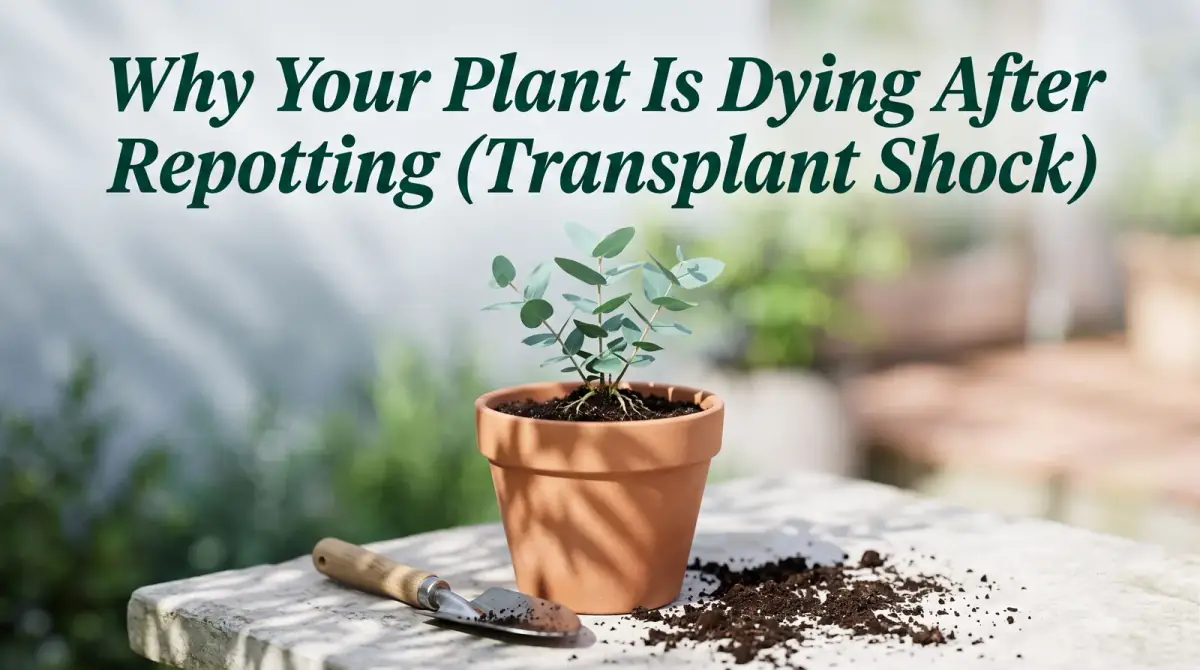
Repotted your plant and now it looks worse? That is usually transplant shock, not death. Here is why plants struggle after repotting and how to help them recover.
- Most post-repotting decline is stress, not death.
- Disturbed roots need a few weeks to regrow and settle.
- Steady light, careful watering, and patience do most of the work.
- Overwatering a stressed plant is a common way to lose it.
- New growth is the clearest sign of recovery.
If you repotted your plant and now it looks worse than before, you are most likely seeing transplant shock, not a plant that is truly dying. A plant dying after repotting is usually just a plant whose roots were disturbed and now need a little time and gentle care to recover. In most cases the drooping, wilting, or leaf drop is temporary, and steady conditions bring it back.
Repotting is good for a plant in the long run, but the moment itself is stressful. Knowing what is normal helps you avoid overreacting and making things worse.
Here is the short version first:
- Most post-repotting decline is stress, not death.
- Disturbed roots need a few weeks to regrow and settle.
- Steady light, careful watering, and patience do most of the work.
- Overwatering a stressed plant is a common way to lose it.
- New growth is the clearest sign of recovery.
What transplant shock is
Transplant shock is the stress a plant feels when its roots are disturbed, exposed, or damaged during a move to new soil or a new pot. Roots are delicate, and even careful repotting breaks some of the fine root hairs that absorb most of the plant's water.
With fewer working roots, the plant briefly struggles to take up water and nutrients. The leaves show that struggle by drooping, curling, yellowing, or dropping while the roots rebuild.
Think of it as jet lag for plants. The plant is not broken, it is adjusting, and it needs stable conditions rather than dramatic interventions.
Why is my plant dying after repotting
When you are asking why is my plant dying after repotting, the honest answer is that it probably is not dying at all. What looks like decline is usually the plant redirecting its energy toward growing new roots instead of holding every leaf upright.
A few things make this worse. Loosely packed soil that leaves air pockets around the roots, a pot that is far too large, or roots that were torn rather than gently teased apart all deepen the stress.
The good news is that the response is the same in almost every case. Keep conditions calm and consistent, avoid the urge to fix everything at once, and give the roots the time they need to catch up with the leaves.
Common signs of repotting stress
Repotting stress tends to show up within a day or two, and the symptoms can look scary even when the plant is fine. Recognizing them helps you stay patient.
- Drooping or wilting leaves, even though the soil is moist.
- Yellowing or browning of older leaves.
- Some leaf drop, especially of lower or outer leaves.
- Slowed or paused growth for a couple of weeks.
- Leaves that look dull or limp before they perk back up.
A little of any of these is normal. What you want to watch for is steady improvement over the following weeks, not perfection on day one.
What to do in the first week
The first week after repotting sets the tone for recovery. The theme is simple: reduce stress and let the plant rest.
Put the plant back in a spot with conditions it already knows, ideally bright indirect light and a comfortable room temperature. Avoid moving it around, and hold off on any fertilizer, since feeding stressed roots can burn them rather than help.
Water gently so the soil is lightly moist, then leave the plant alone. Constant fussing, poking, and rechecking only adds to the stress it is already carrying.
Watering a recovering plant
Watering is where good intentions often go wrong. A drooping plant looks thirsty, so the instinct is to keep adding water, but a plant with reduced roots cannot use much, and soggy soil quickly invites rot.
Aim for lightly moist soil, never waterlogged. Check the top inch with your finger and water only when it starts to feel dry, letting any excess drain away completely. If you are unsure, wait a day, since a recovering plant handles being a touch too dry far better than sitting in water its reduced roots cannot use.
Make sure the pot has drainage holes and never let it sit in standing water. A stressed plant in soggy soil is the most common way a recoverable setback turns into a real loss.
Light and location during recovery
Light gives a recovering plant the energy to rebuild, but too much of it too soon can overwhelm reduced roots. The sweet spot for most houseplants is bright, indirect light.
Keep the plant out of harsh direct sun for the first couple of weeks, since strong light pulls moisture from the leaves faster than weakened roots can replace it. Gentle, steady light is kinder while the plant recovers.
Try to keep it away from cold drafts, heating vents, and hot windows too. The more stable its surroundings, the less energy it wastes reacting to change.
Mistakes that make transplant shock worse
A few well-meaning habits can slow recovery or tip a stressed plant over the edge. Avoiding them is often more important than anything you actively do.
- Overwatering because the plant looks droopy and sad.
- Fertilizing right away in an effort to give it a boost.
- Moving the plant repeatedly to find a better spot.
- Repotting again in a panic when it does not bounce back instantly.
- Cutting off leaves that might still recover and photosynthesize.
When in doubt, do less. A calm, consistent environment beats a flurry of fixes almost every time.
How long recovery takes
Most plants shake off transplant shock within one to three weeks, though tougher cases can take longer. Smaller, fast-growing plants often bounce back quickly, while larger or slower species take their time.
The signal you are looking for is new growth: a fresh leaf, a new shoot, or perked-up foliage. That tells you the roots have re-established and the plant is back on track.
If weeks pass with continued decline and no new growth, gently check the roots for rot and confirm you are not overwatering. Even then, many plants recover with patience and the right care.
The bottom line
A plant dying after repotting is, far more often than not, a plant working through temporary transplant shock. Give it stable light, careful watering, and time, and resist the urge to intervene at every turn. Results vary from plant to plant, but with calm, consistent care, most repotted plants settle in and reward your patience with fresh growth.
Comments
0 total