
The short answer
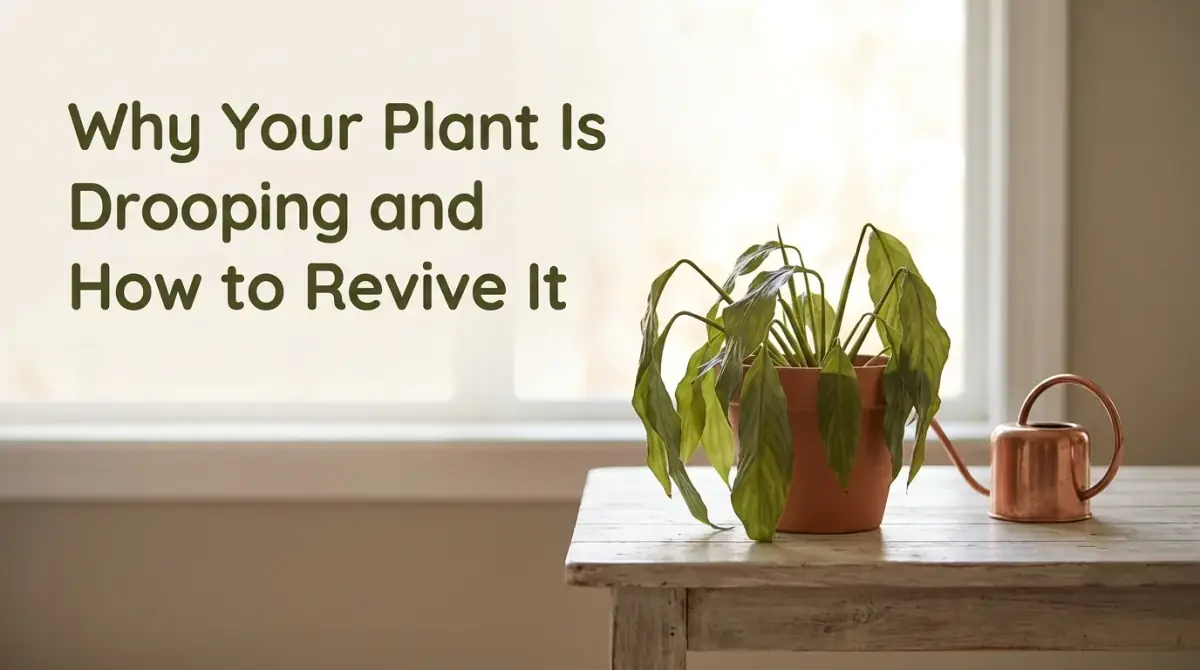
A drooping plant is almost always an easy fix once you check the soil. Learn why your plant is drooping, from thirst to overwatering, and how to revive it fast.
- Thirst is the most common and fastest reason to fix.
- Soggy soil can droop a plant just as badly as dry soil.
- Repotting and moving often cause temporary wilting.
- Check the soil first before you reach for the watering can.
- Most drooping plants recover within a day or two of the right fix.
If your plant is suddenly drooping, it is usually asking for one simple thing, and you can often fix it the same day. The most common answers to why is my plant drooping are thirst, overwatering, or the stress of a recent move or repotting. A wilting plant looks alarming, yet the great majority perk back up once you find the cause and correct it.
Drooping is a fast, visible signal, which is actually good news. It gives you an early warning while there is still plenty of time to help.
Here is the short version before the details:
- Thirst is the most common and fastest reason to fix.
- Soggy soil can droop a plant just as badly as dry soil.
- Repotting and moving often cause temporary wilting.
- Check the soil first before you reach for the watering can.
- Most drooping plants recover within a day or two of the right fix.
What drooping actually means
Plants stay upright thanks to water pressure inside their cells, a bit like air in a tire. When that pressure drops, stems and leaves go soft and sag. So drooping is almost always a sign that water is not moving through the plant the way it should.
The confusing part is that both too little and too much water lead to the same droop. In one case the plant has no water to work with, and in the other the roots are too damaged to take water up. Reading the soil is how you tell them apart.
Before you do anything else, push a finger into the soil. What you feel there decides your next move.
Thirst: the fastest fix
The happiest reason for a droop is simple thirst. If the soil feels dry and the plant is wilting, it has likely used up its water and is running on empty.
Water it thoroughly until moisture runs from the drainage holes, then let the excess drain away. Many plants stage a dramatic recovery within a few hours, standing back up as if nothing had happened.
If the soil is so dry it has shrunk from the sides of the pot, water may run straight through without soaking in. In that case, set the pot in a tray of water for twenty to thirty minutes so the soil can drink from the bottom up.
Overwatering and root problems
Here is the twist that catches many people out. A plant sitting in constantly wet soil also droops, because waterlogged roots cannot breathe and slowly begin to rot. Rotting roots stop delivering water, so the leaves wilt even though the soil is soaked.
Check for the telltale signs. Wet soil, a sour smell, yellowing leaves, and a mushy base all point to overwatering rather than thirst.
If that is the picture, hold off on watering completely. Let the soil dry out, make sure the pot drains freely, and if the roots look brown and mushy, trim the damaged ones and repot into fresh, well-draining mix.
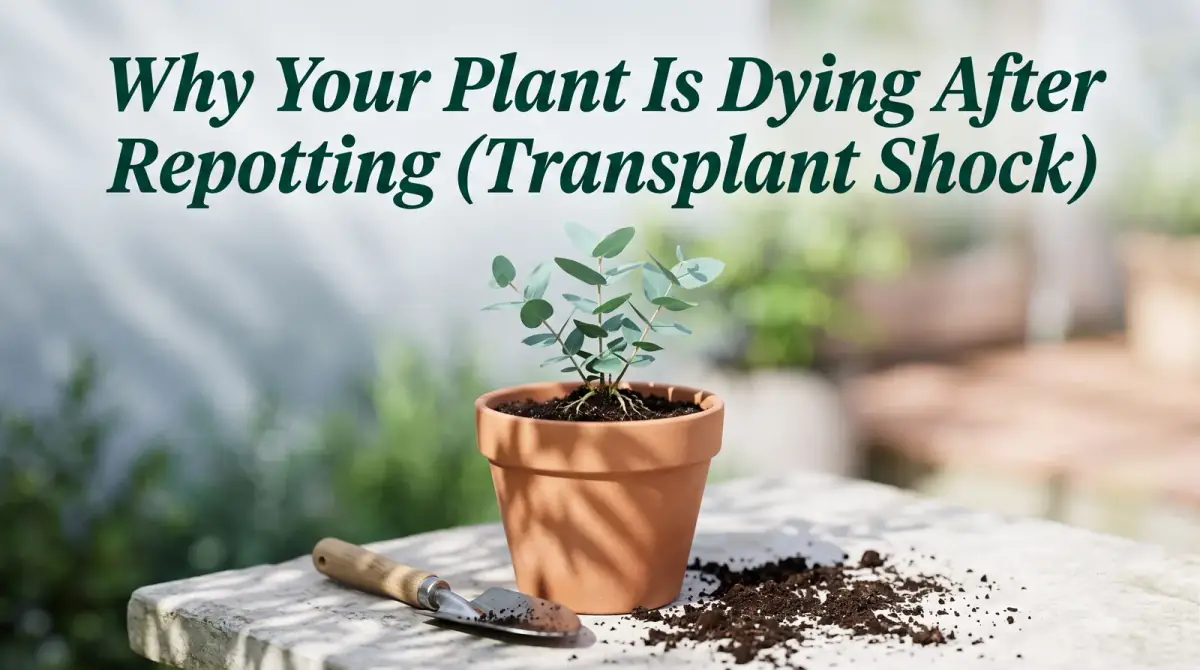
Why is my plant drooping after repotting
A plant drooping after repotting is one of the most common worries, and usually one of the least serious. When you move a plant to a new pot, its roots get disturbed, and for a short time they struggle to pull up water as efficiently as before. The leaves respond by sagging.
This is a form of transplant stress, and it is generally temporary. As long as the roots were handled reasonably gently, the plant tends to settle within a week or two.
Help it along by keeping the soil lightly moist but never soggy, placing the plant in bright indirect light, and holding off on fertilizer until you see new growth. Resist the urge to keep fussing, since stability is what a recovering plant needs most.
Light, heat, and drafts
Water is not the only trigger. A plant sitting in harsh, hot sun can wilt as it loses moisture faster than the roots can replace it, even when the soil is damp. Moving it out of the fierce midday rays often brings it back.
Cold is a factor too. A chilly draft from a door, window, or air conditioner can shock a plant into drooping. Most houseplants prefer steady, comfortable room temperatures without sharp swings.
Think about anything that changed recently. A new location, a heating vent switched on, or a cold night by the window can all explain a sudden sag.
How to revive a drooping plant, step by step
When you want to know how to revive a drooping plant, a calm routine works better than panic. Follow these steps in order.
- Feel the soil. Dry means water now, soggy means stop watering.
- If dry, water thoroughly and let the pot drain fully.
- If soggy, move the plant somewhere airy so the soil can dry out.
- Shift the plant out of harsh sun and away from cold drafts.
- Remove any leaves that are already mushy or fully browned.
- Give it two or three days of steady, undisturbed care and watch.
Change one thing at a time. If you water, move, and repot all at once, you will not know what actually helped, and the extra handling can add stress.
How to prevent a wilting houseplant
Preventing the next droop is mostly about consistency. A wilting houseplant is often a plant on a feast-or-famine schedule, soaked one week and forgotten the next.
- Water based on how the soil feels, not a fixed day of the week.
- Use pots with drainage holes so roots never sit in water.
- Keep plants in stable light and temperature where you can.
- Learn each plant's preferences, since some like to dry out more than others.
A quick soil check every few days takes seconds and prevents most surprises. Over time you will learn the weight and feel of a pot that needs water versus one that is fine.
When drooping is more serious
Most droops are easy fixes, but a few need more attention. If a plant stays limp for more than a week despite correct watering, gently slide it from its pot and check the roots. Healthy roots are firm and pale, while rotting roots are brown, soft, and often smell bad.
Badly rotted roots mean the plant needs a little surgery: trim away the mush, keep any firm white roots, and repot into fresh, dry mix. It is not a guarantee, but many plants recover from even serious setbacks.
Give any recovering plant time and steady conditions. Rushing it with extra water or feed usually does more harm than good.
The bottom line
Figuring out why is my plant drooping starts with one honest soil check, which points you toward water, drainage, light, or simple transplant stress. Correct the cause, remove what is clearly damaged, and give the plant a few quiet days to recover. Results vary from plant to plant, but with patient, consistent care, most wilting plants stand tall again.
Comments
0 total