
The short answer
Black leaves signal dead tissue from root rot, cold, or infection. Learn why your plant leaves are turning black and how to stop the damage before it spreads.
- Soggy soil and root rot are the most common causes.
- Cold drafts and frost blacken leaves fast.
- Fungal and bacterial infections spread if left alone.
- Black, dead tissue will not turn green again, so remove it.
- Fixing the cause matters more than saving each leaf.
When you notice your plant leaves turning black, it almost always comes down to one of four things: rot at the roots, a fungal or bacterial infection, cold damage, or scorch from harsh sun or fertilizer. The pattern tells you which, so look at where the black sits on the leaf, whether it feels soft or crisp, and how quickly it appeared.
Black is more serious than yellow, since yellow leaves are fading while black ones have already died. Even so, most plants survive if you act before the problem takes over.
Here is the quick overview:
- Soggy soil and root rot are the most common causes.
- Cold drafts and frost blacken leaves fast.
- Fungal and bacterial infections spread if left alone.
- Black, dead tissue will not turn green again, so remove it.
- Fixing the cause matters more than saving each leaf.
What black leaves mean
Black on a leaf almost always means dead tissue. Something has killed those cells, whether it is rot at the roots, cold in the air, or an infection on the leaf itself.
Because several problems produce the same dark color, you have to read the clues around it. Where the black appears, how fast it spread, and the state of the soil all help you name the real cause.
Read the pattern before you treat anything
This is the most useful step, and most people skip it. The shape and position of the black tissue narrows four possible causes down to one, which saves you from drenching a plant that is already drowning.
Take the plant into good light and press the dark area with a fingertip. Soft and wet points one way, dry and brittle points another.
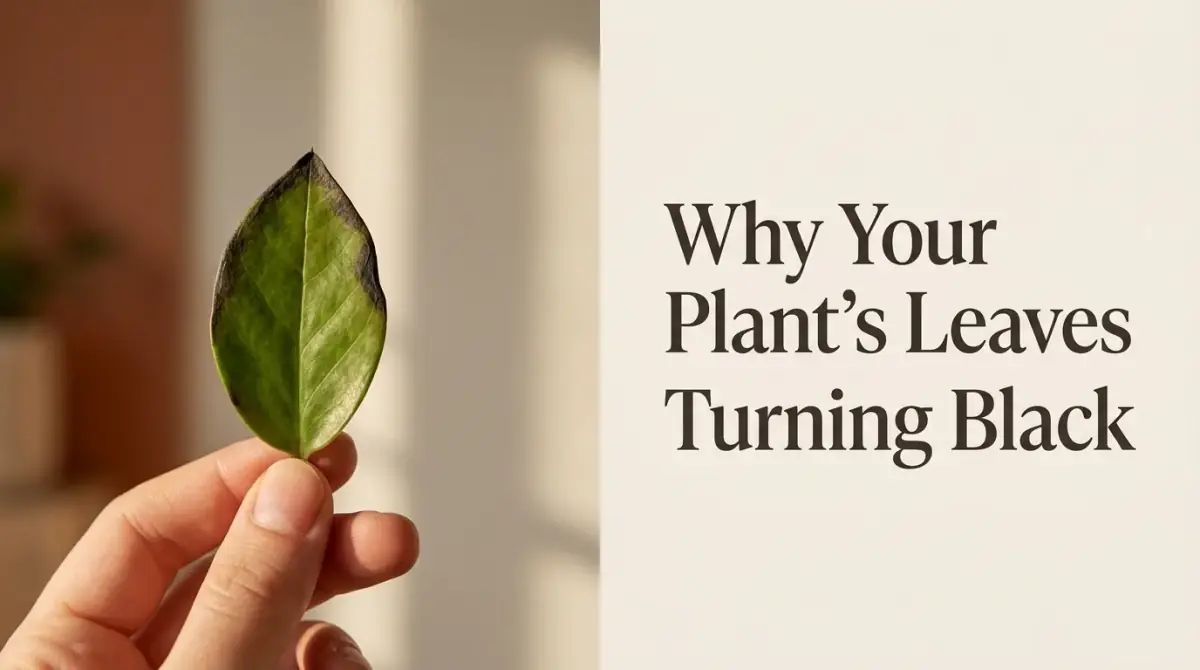
Black tips and edges
When only the outer rim or the very tip has gone dark, and it feels crisp and papery, the cause is a moisture or feeding problem rather than disease. Tips are the farthest point from the roots, so they starve first when water delivery is disrupted.
Erratic watering, salt buildup from fertilizer, or very dry air all produce this, and there is often a thin yellow band between the black and the healthy green.
Black spots scattered across the leaf
Distinct round or angular spots, especially with a yellow halo or a slightly wet, greasy edge, point to a fungal or bacterial infection. The spots start small, appear on several leaves at once, and grow or merge over days.
Watering problems do not produce neat circles in the middle of an otherwise healthy leaf. If the damage has an outline, think disease first.
A whole leaf turning black at once
When an entire leaf goes limp and dark within a day or two, suspect cold or a sudden shock. Frost, an open window in winter, or contact with freezing glass can blacken foliage overnight.
Root rot produces the same whole-leaf collapse, but more slowly and usually from the lowest leaves upward. Check the soil: cold damage happens in soil of any moisture level, while rot comes with soil that has stayed wet.
Black at the base of the leaf or on the stem
This is the most urgent pattern. Blackening that starts where the leaf meets the stem, or dark mushy patches on the stem itself, means the rot has moved out of the roots and into the plant's plumbing.
Squeeze the stem near the soil line. If it feels soft, hollow, or slimy, you are dealing with advanced rot or stem blight and need to act the same day.
Root rot from overwatering
The most common reason for black leaves starts underground. When soil stays waterlogged, the roots suffocate and begin to rot, and root rot leaves the plant unable to move water properly, so leaves darken, soften, and blacken.
Rot-related black leaves are soft and mushy rather than crisp, and they come with wet soil, a sour smell, and a limp plant that does not perk up after watering.
How to check the roots
Do not guess. Tip the pot on its side, support the base of the plant with one hand, and slide the root ball out. It takes a minute and tells you more than staring at the leaves.
Healthy roots are firm and pale, usually white, cream, or light tan, and they hold their shape when you tug them gently. Rotten roots are dark brown or black, soft, and thin. The outer sheath often slips off between your fingers and leaves a bare thread behind, and the smell is sour rather than earthy.
Trim every soft dark root back to firm tissue with clean scissors, keep the pale roots, and repot into fresh, well-draining soil in a pot with drainage holes. Water lightly, then only when the top inch of soil feels dry.
Fungal and bacterial leaf spot
Sometimes the problem is a disease rather than a watering mistake. Fungal and bacterial infections often begin as black spots on leaves, which then spread and merge if conditions stay damp. These spots may have yellow halos or look wet and greasy at the edges.
Fungal spots tend to be drier, rounder, and sometimes ringed, with a fine dusty or fuzzy texture in humid weather. Bacterial spots more often look water-soaked and translucent when held up to the light, spread along leaf veins into angular shapes, and can ooze slightly.
To separate both from watering damage, look at the edges. Watering damage blends into the surrounding tissue and follows the leaf tip or margin. Infection appears in defined patches, on several leaves at once, and keeps spreading even after you correct your watering.
Remove affected leaves promptly with clean tools, sterilizing the blades between cuts, and avoid wetting the foliage when you water. Improving airflow and spacing plants out often stops the spread without anything stronger.
Cold and frost damage
Cold is a fast way to blacken a leaf. When a tender plant is exposed to cold drafts, a chilly windowpane, or frost, the affected leaves can turn dark and limp within a day.
The clue here is location. Black or darkened patches on the side facing a cold window, or sudden damage after a cold night, point straight to temperature. Cold damage is also strangely tidy, hitting the exposed leaves hard and leaving sheltered ones untouched.
Move the plant somewhere warmer and more stable, away from drafts and cold glass. Do not rush to prune outdoor plants after a frost, because the damaged growth shields the crown from the next cold snap. Wait until the risk of frost has passed, then cut back to healthy tissue.
Sunburn, scorch, and fertilizer burn
A plant moved suddenly into harsh direct sun can scorch, leaving dark, dry patches where the light was strongest. These sit on the upper surface, on the leaves facing the window or sky, and feel thin and brittle. Easing a plant into brighter light over a week or two prevents this, and wind does the same outdoors, blackening edges on the exposed side of the plant.
Fertilizer burn works from the roots up. Too much feed leaves salts in the soil that damage fine root hairs and blacken leaf edges, and you may see a white crust on the soil surface or around the drainage holes. Flush the pot with plenty of plain water, letting it run through several times, and feed more sparingly from then on.
Outdoor and garden plants
Outdoor plant leaves turning black usually trace back to three culprits: frost, waterlogged ground, and blight. The diagnosis is the same as indoors, but the weather does the damage instead of your watering can.
Frost is the classic cause in spring and autumn. Tender bedding plants, dahlias, basil, and new growth on shrubs blacken after a single cold night, usually on the top and outer growth where cold air settles first. Fleece, cloches, or moving pots against a wall overnight prevents it.
Waterlogged soil is the outdoor version of overwatering, and heavy clay or a compacted bed holds water long after the rain stops. Roots sitting in airless mud rot exactly as they would in a pot without drainage. Improve the ground with compost and grit, raise the bed if you can, and stop walking on wet soil, which compacts it further.
Blight and related diseases hit tomatoes, potatoes, and some ornamentals in warm, wet spells. It shows as fast-spreading dark brown to black patches on leaves and stems, often with pale margins, and it moves far quicker than any watering fault. Remove and bin affected material rather than composting it, water at soil level, and space plants for airflow.
One more outdoor cause is easy to mistake for disease. Sooty mold is a black film that wipes off with a damp cloth, and it grows on the honeydew left by aphids or scale, so treat the pests and the black goes with them.
What to do right now
Start with the soil, not the scissors. Push a finger two inches down. If it is wet, stop watering completely and let it dry out. If it is bone dry and the leaf edges are crisp, water thoroughly until it runs from the drainage holes.
Then decide on the leaves. Remove any leaf that is more than about half black, plus any that are soft, slimy, or clearly infected, cutting back to healthy tissue with clean scissors. Leave partly black leaves alone if the plant only has a few, because even damaged foliage still feeds the plant.
Repot only if the roots are rotting, the soil smells sour, or water sits on the surface instead of draining. Repotting a healthy plant adds stress it does not need. Move the plant out of direct sun and cold drafts while it recovers, and hold off on fertilizer until you see fresh growth.
What to stop doing
Several well-meant reactions make black leaves worse. These are worth avoiding.
- Watering more because the plant looks limp, when limpness from rot looks identical to thirst.
- Feeding a struggling plant, which burns roots that are already damaged.
- Misting a plant with spotted leaves, since damp foliage is what fungal and bacterial infections need.
- Stripping off every affected leaf at once, leaving the plant nothing to photosynthesize with.
- Leaving a decorative outer pot full of standing water under the nursery pot.
When a plant cannot be saved
Some plants are past rescuing, and knowing when to stop saves you weeks of hopeful watering. If the stem is black and mushy right down to the soil line, and squeezing it produces softness rather than resistance, the plant's vascular system has gone.
Likewise, if you unpot it and find no firm pale roots, only dark threads that fall apart, there is nothing left to support new growth. A plant with no viable roots and no green growing point will not come back.
Before giving up, check for salvage. A single firm section of stem or an unaffected offshoot can often be cut off and rooted, and many plants are easier to restart from a healthy cutting than to nurse back from advanced rot. If nothing firm remains, dispose of the plant and its soil rather than reusing either.
How to prevent plant leaves turning black
Preventing plant leaves turning black comes down to a few steady habits that remove the usual triggers before they start.
- Water only when the top inch of soil feels dry, and use pots that drain.
- Keep plants away from cold drafts, frosty windows, and heat sources.
- Give plants space and airflow so leaves dry and disease struggles.
- Avoid soaking the foliage, especially late in the day.
- Feed sparingly and flush the soil now and then to clear salts.
- Outdoors, cover tender plants on cold nights and improve drainage before you plant.
Consistency is the real secret. Plants handle almost anything better when their conditions stay stable and predictable from week to week.
The bottom line
Plant leaves turning black almost always trace back to root rot, infection, cold, or scorch, and the pattern on the leaf tells you which one you have. Read the clues first, remove the dead tissue, fix the underlying cause, and keep conditions steady. Results vary from plant to plant, but with prompt, attentive care, most plants recover and grow on.

Comments
0 total