
The short answer
Seeing ants march up your houseplant? Discover why your plant is attracting ants, the hidden pest that is really behind it, and safe, simple ways to get rid of them for good.
- Ants are drawn to honeydew, a sugary waste left by sap-sucking pests.
- Ants themselves rarely harm plants, but they protect the pests that do.
- Check leaf undersides and stems for aphids, mealybugs, or scale.
- Treat the underlying pest first, then remove the ants.
- Soap sprays, rinsing, and good drainage solve most cases without harsh chemicals.
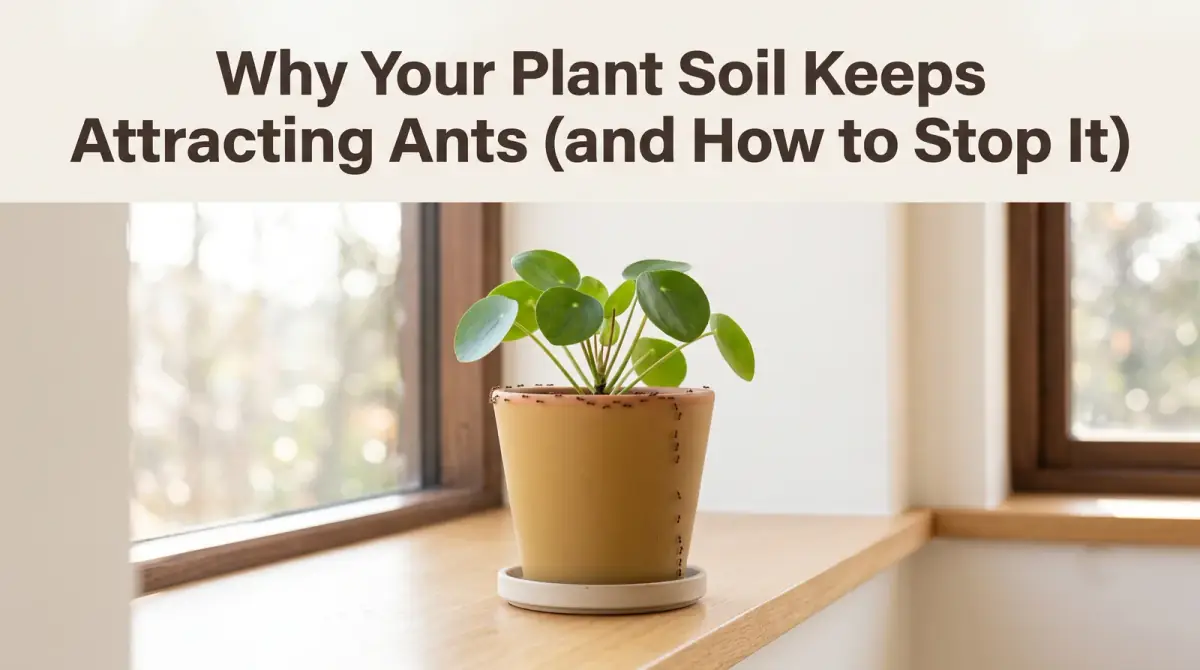
If you are wondering why is my plant attracting ants, the surprising answer is that the ants are rarely the real problem. Ants swarm plants because they are chasing a sweet, sticky substance called honeydew, which is produced by tiny sap-sucking insects such as aphids, mealybugs, and scale. So a line of ants marching up a stem is usually a signal that your plant has a hidden pest infestation you have not spotted yet.
Deal with the insects making the honeydew, and the ants lose their reason to visit. Chase only the ants, and they will keep coming back.
Key takeaways
- Ants are drawn to honeydew, a sugary waste left by sap-sucking pests.
- Ants themselves rarely harm plants, but they protect the pests that do.
- Check leaf undersides and stems for aphids, mealybugs, or scale.
- Treat the underlying pest first, then remove the ants.
- Soap sprays, rinsing, and good drainage solve most cases without harsh chemicals.
So, why is my plant attracting ants?
Ants are opportunists with a serious sweet tooth. When they discover a reliable source of sugar, they leave a scent trail so the rest of the colony can follow. On a houseplant or in a garden pot, that sugar source is almost always honeydew.
Occasionally ants show up for other reasons, such as dry soil that makes a cozy nesting spot, or a pot left near an existing outdoor colony. But most of the time, a steady stream of ants means something else is living on your plant and feeding them well.
The honeydew connection
Honeydew is the polite name for the sugary waste that sap-sucking insects excrete as they feed on plant juices. Several common pests produce it:
- Aphids, small green, black, or white insects that cluster on new growth.
- Mealybugs, which look like tiny tufts of white cotton in leaf joints.
- Scale, small brown bumps that cling to stems and leaf undersides.
- Whiteflies, which flutter up in a cloud when you disturb the plant.
These pests weaken a plant by draining its sap, and the sticky honeydew they leave behind can also grow a black, sooty mold. The ants are simply farmers, tending and protecting their sugar-producing herd. That partnership is exactly why the ants will not leave until the pests are gone.
Are ants in plant soil actually harmful?
By themselves, ants in plant soil do little direct damage. They do not eat healthy roots or chew leaves, and in small numbers they are mostly a nuisance.
The problem is what they represent and what they enable. Ants actively defend aphids and mealybugs from natural predators like ladybugs, which lets the real pests multiply unchecked. A large colony can also disturb roots as it tunnels, and heavy nesting can dry out the soil around delicate roots. So while the ants are not the villains, they are a warning sign you should not ignore.
How to find the real culprit
Before you treat anything, play detective. Take the plant somewhere with good light and look closely.
- Turn leaves over and inspect the undersides, where pests love to hide.
- Check the joints where leaves meet stems for cottony or bumpy clusters.
- Run a finger along the stems, feeling for stickiness, which signals honeydew.
- Look for black sooty mold, a sign the infestation has been going a while.
Follow the ant trail, too. It often leads straight to the colony of pests they are protecting, which tells you exactly where to focus your effort.
How to get rid of ants in plants safely
Once you know what you are dealing with, you can tackle it without dousing your home in harsh chemicals. Start gentle and work up only if needed.
- Rinse the plant. A firm spray of water knocks off many aphids and much of the honeydew that draws ants.
- Use a mild soap spray. A little insecticidal soap, or a few drops of dish soap in water, smothers soft-bodied pests. Test one leaf first.
- Wipe with diluted alcohol. Dabbing mealybugs and scale with a cotton swab dipped in rubbing alcohol removes them directly.
- Let the ants lose interest. With the honeydew source gone, the trail usually fades within days.
Repeat treatments every few days, since pests hatch in waves. Persistence matters more than strength here.
Dealing with ants nesting in potted plants
Sometimes ants in potted plants have moved in to actually nest, not just to feed. If you see soil being pushed up, or ants streaming out when you water, a colony may have settled in.
The most effective fix is to flush them out. Submerge the whole pot in a bucket of water for fifteen to twenty minutes, keeping the soil line below the surface. The ants will float up and evacuate, and your plant will be fine. Let the pot drain fully afterward so the roots do not sit in water.
How to keep ants from coming back
Prevention is far easier than repeated battles. A few habits keep both pests and their ant escorts away.
- Inspect new plants before bringing them home, since pests often hitch a ride.
- Avoid overwatering, because damp, crumbly soil attracts nesting ants.
- Clear fallen leaves and debris from the soil surface.
- Wipe leaves now and then so honeydew never has a chance to build up.
- Keep plants healthy, since strong plants resist pests far better.
These small routines cost almost nothing and quietly prevent most infestations before they ever start.
Natural deterrents worth trying
Once the pests are under control, a few gentle deterrents can discourage stray ants from wandering back. None of these will fix an active infestation on their own, but they do help keep casual scouts at bay.
- A cinnamon or citrus barrier. Ants dislike strong scents, so a light dusting of cinnamon on the soil surface can nudge them elsewhere.
- Diatomaceous earth. A thin ring of this fine powder around the base of the pot disrupts ants that try to cross it. Reapply it after watering.
- A sticky barrier. A band of horticultural glue around a pot leg or plant stand stops ants from climbing up in the first place.
Treat these as backup rather than as your main plan. The insects producing honeydew are still the root of the problem, and no scent trick replaces actually removing them.
When to repot entirely
If a colony refuses to leave, or the soil has become a genuine ant highway, a full repot is the reset button. Gently remove the plant, rinse the roots clean of old soil, discard that soil, and replant in fresh potting mix in a clean pot.
This clears out any eggs, nesting tunnels, and lingering pests in one move. Combined with treating the plant itself, it usually settles the question of why is my plant attracting ants for good.
Comments
0 total